The Silent Toll of Chronic Muscle Pain: Stop Guessing, Start Testing:
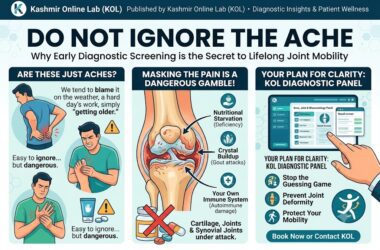
It is incredibly frustrating when you are constantly battling unexplained muscle weakness, severe aching, or a lingering sense of exhaustion. Patients often brush off these symptoms, blaming them on a hard day’s work, getting older, or simply the harsh Kashmir winters. While it is completely normal to feel tired, persistent muscle pain and profound fatigue can be factual warning signs of underlying inflammation or cellular damage.
Here are the silent conditions that might be causing distress, and the specific diagnostic tests that can uncover them.
Identifying Hidden Systemic Inflammation
Sometimes, an ache is not an isolated injury but a systemic issue. Inflammatory activity can quietly wreak havoc on the body, and a straightforward way to detect it is through an ESR (Erythrocyte Sedimentation Rate) Test.
When inflammation is present, specific proteins cause red blood cells to clump together and settle much faster than normal.
A faster sedimentation rate acts as a powerful, non-specific clinical marker for hidden inflammatory activity.
This screening is highly recommended for unexplained fevers, tracking severe infections, or monitoring chronic autoimmune conditions.
The Danger of Undetected Muscle Damage
When muscle tissue degrades or sustains damage, it leaks an enzyme called Creatine Phosphokinase (CPK) into the bloodstream.
High levels of CPK strongly point to muscle disorders, injuries from severe trauma, or side effects from cholesterol-lowering statins.
The CPK Blood Test is clinically crucial if a patient experiences unexplained muscle weakness, severe pain, or dark, “tea-colored” urine.
Tracking Tissue Injury at the Cellular Level
Lactate Dehydrogenase (LDH) is another critical diagnostic marker. Under normal physiological conditions, LDH levels remain relatively low.
When cells or tissues are injured by disease, infection, or trauma, they release LDH directly into the bloodstream.
An LDH Test serves as a generalized indicator of acute tissue injury, assisting in the evaluation of liver disease or specific types of anemia.
Take Control of Your Health Today Guessing a diagnosis can delay essential care. At Kashmir Online Lab, patients can book these vital tests and skip the hospital rush with convenient home sample collection across Srinagar, receiving fast, NABL-compliant digital reports.