When managing long-term neurological conditions like epilepsy, or mood disorders such as Bipolar Disorder and clinical depression, finding the right medication feels like a major victory. The seizures stop, the mood swings stabilize, and daily life regains its rhythm.
However, unlike a standard course of antibiotics or a simple vitamin supplement, psychotropic and anti-seizure medications operate on an extraordinarily fine line.
In clinical terms, these treatments have a “narrow therapeutic index.” This means the biological difference between a dose that effectively protects your brain and a dose that causes unwanted, toxic side effects is microscopic. Furthermore, as our bodies age, experience dietary changes, or process stress, the rate at which our liver and kidneys clear these daily medications can change dramatically.
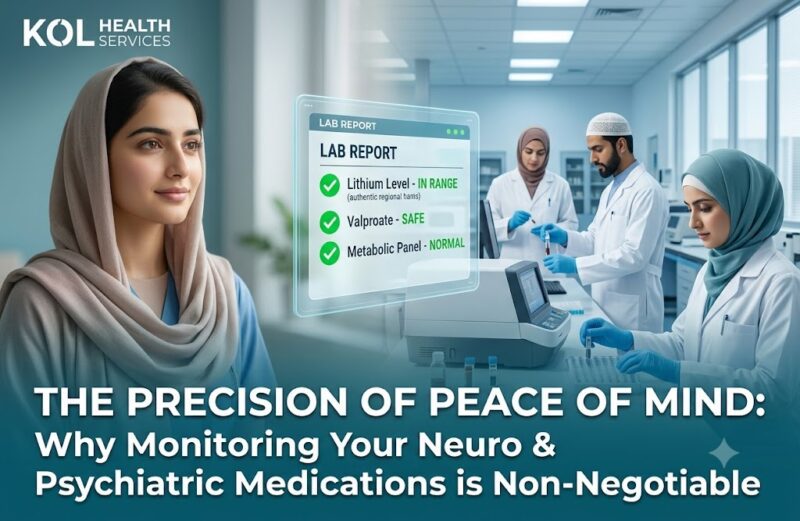
Here is why relying on routine prescriptions without monitoring your blood levels is a dangerous guessing game—and how the Expanded Therapeutic Drug Monitoring (TDM) & Neuro-Psychiatry Panel from Kashmir Online Lab (KOL) provides complete clinical clarity and safety for you and your physician.
The Goldilocks Zone: Not Too Little, Not Too Much
When taking medications like Lithium, Valproate, Carbamazepine, or Phenytoin, your blood concentration must remain consistently within a precise target window—the “Goldilocks Zone”:
If the level drops too low (Sub-therapeutic): You are left unprotected. A sudden drop in drug levels is the leading cause of unexpected breakthrough seizures in epilepsy patients or severe manic/depressive relapses in mood disorders.
If the level creeps too high (Toxic): The medication begins to poison the nervous system and bodily organs. Patients may experience hand tremors, severe dizziness, brain fog, slurred speech, or, over time, silent liver and kidney damage.
Key Takeaway: You cannot accurately judge drug levels by how you feel on any given morning. Only direct serum quantification gives your doctor the data required to adjust your daily dosage safely.
Beyond the Drug: Why Organ Safety & Nutrition Matter
Managing neuropsychiatric wellness requires looking at the whole body, not just the medication in your bloodstream. That is why the KOL TDM & Neuro-Psychiatry Panel bundles drug monitoring with comprehensive organ and nutritional safety checks:
1. Protecting Your Liver and Kidneys
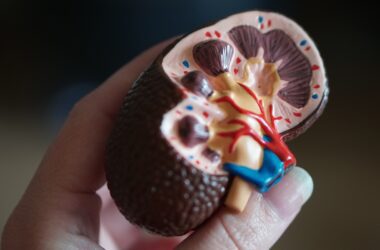
Long-term medication relies entirely on your liver enzymes for breakdown and your kidneys for filtration. For example, Lithium is cleared exclusively through the kidneys; if renal function slows down even slightly, Lithium can accumulate to toxic levels. Similarly, mood stabilizers processed by the liver require routine liver function tests (LFTs) to catch early inflammation before symptomatic jaundice or fatigue occurs.
2. Ruling Out the “Imposters” of Depression
Did you know that an sluggish thyroid (Hypothyroidism) or a severe Vitamin B12 and Vitamin D deficiency can cause symptoms that are identical to clinical depression, anxiety, and memory loss? By testing your TSH, B12, and Vitamin D levels alongside your medications, we ensure your doctor isn’t increasing psychiatric medication when what your brain actually needs is simple metabolic or nutritional supplementation.
Why Patients & Caregivers Trust KOL
When dealing with sensitive neurological and psychiatric therapies, consistency, accuracy, and comfort are paramount.
🏡 Discreet, Bedside Home Sample Collection: For patients experiencing fatigue, mobility challenges, or anxiety, visiting a busy hospital lab can be overwhelming. Our NABL-trained phlebotomists arrive at your doorstep across Srinagar and Kashmir, ensuring a calm, supportive, and hygienic blood draw in the comfort of your home.
⏰ Strict Trough-Level Compliance: Our scheduling team guides caregivers on precise sample timing—ensuring blood is collected right before the morning dose—guaranteeing that your treating psychiatrist or neurologist receives true, medically actionable trough values.
🔬 Automated Analytical Precision: Measuring nanogram-level drug concentrations requires high-end immunoassays. KOL utilizing automated diagnostic platforms to ensure zero cross-contamination and gold-standard reproducibility.
⚡ Same-Day Digital Reports: In neuro-psychiatry, timely adjustments prevent hospitalizations. Our verified reports are delivered digitally within 12 to 24 hours, allowing your healthcare team to make immediate dosage decisions.
When Should You Book This Screening?
We strongly recommend scheduling the Expanded TDM & Neuro-Psychiatry Panel under any of the following circumstances:
Routine Safety Baseline: Every 3 to 6 months for any patient on stable, long-term Lithium, Valproate, Carbamazepine, or Phenytoin therapy.
After a Dosage Change: 7 to 14 days after your doctor increases or decreases your medication prescription.
Breakthrough Symptoms: If a patient experiences a sudden relapse in mood instability, anxiety spikes, or breakthrough seizures.
Signs of Toxicity: If the patient develops unexplained hand tremors, excessive daytime sleepiness, confusion, unsteadiness when walking (ataxia), or persistent nausea.
Take the Guesswork Out of Brain Health
Mental wellness and neurological stability are built on clinical precision. Don’t let unmonitored medication levels jeopardize your recovery or organ health. By pairing drug level verification with metabolic and organ safety checks, you empower your healthcare team to tailor your treatment with absolute confidence.
Schedule your precision monitoring today:
Book Online: Visit the Kashmir Online Lab portal to reserve your home collection slot in seconds.
Caregiver Support: Contact our helpdesk for guidance on medication fasting and trough-timing protocols.
Digital Clarity: Receive verified, NABL-quality diagnostic reports straight to your smartphone and email.
Protect your peace of mind. Book your Expanded TDM & Neuro-Psychiatry Panel with KOL today.