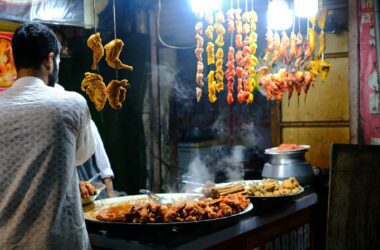
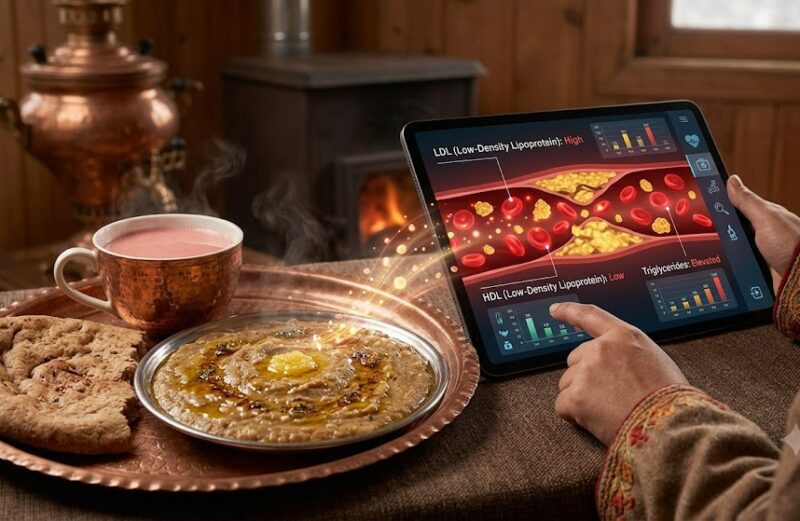
When the first snow settles over the Pir Panjal range and temperatures in the valley drop below freezing, life in Kashmir undergoes a massive shift. The pherans come out, the kangris are prepared, and our entire relationship with food transforms. Winter in Kashmir—especially the grueling 40 days of Chillai Kalan—demands warmth, energy, and comfort.
For centuries, our ancestors survived these harsh winters through a specific culinary survival strategy: calorie-dense, fat-rich, and heavily salted foods.
Today, that traditional winter diet remains largely unchanged. We still crave piping hot Harissa on frosty mornings, copious cups of Noon Chai with butter-slathered kandur bread, and rich mutton curries. But while our diet has stayed the same, our lifestyles have dramatically shifted. We no longer walk miles through deep snow or chop wood to keep warm. We drive cars with heaters, sit at desks, and rely on electric blankets.
This mismatch between a 19th-century winter diet and a 21st-century sedentary lifestyle is quietly wreaking havoc on our cardiovascular health. If you were to check the blood work of an average Kashmiri in November and then again in March, the most alarming changes would likely appear in their Lipid Profile.
Here is exactly how our beloved winter comfort foods impact cholesterol levels, and how you can navigate the season without sacrificing your health or your culture.
Understand How the Traditional Kashmiri Winter Diet Impacts Your Lipid Profile. Discover how traditional winter foods in Kashmir, like Harissa and Noon Chai, can influence your cholesterol levels and heart health, and learn practical tips to manage your health during the cold months
The Chemistry of the Kashmiri Winter Diet
To understand what happens to your blood during winter, we have to look objectively at what we consume. The Kashmiri winter diet is heavily skewed toward saturated fats, sodium, and simple carbohydrates.
1. The Harissa Phenomenon
Nothing defines a Kashmiri winter quite like Harissa. It is a masterpiece of slow cooking—mutton cooked down to a paste with rice flour, spices, and an incredibly generous tempering of smoking hot oil or nun ghee (clarified butter) poured over the top right before serving.
The Impact: Harissa is a protein powerhouse, which is great, but it is also a saturated fat bomb. Saturated fats are the primary driver of elevated Low-Density Lipoprotein (LDL), commonly known as “bad cholesterol.” When you consume Harissa frequently, the liver produces more LDL cholesterol than the body can use, leading to plaque buildup in the arteries.
2. Noon Chai and Kandur Bakery
The morning and afternoon ritual of Noon Chai (pink salt tea) paired with local bakery items—girda, lavasa, bakarkhani, or tschot—is deeply ingrained in our daily rhythm. During winter, we tend to drink more of it to stay warm, often adding a dollop of butter or malai to the cup.
The Impact: The bread from the local kandur (baker) is primarily refined white flour (maida). Refined carbohydrates break down quickly into sugar. What the body doesn’t burn for energy immediately is converted by the liver into Triglycerides—a type of fat found in your blood. High triglycerides combined with high LDL is a dangerous recipe for metabolic syndrome. Furthermore, the high sodium content in Noon Chai directly impacts blood pressure, creating a compounding risk for heart disease.
3. Red Meat and Winter Feasts
Even outside of Wazwan season, the winter diet leans heavily on red meat. Mutton forms the base of most winter dinners, often cooked with root vegetables like turnips (gogji) or dried vegetables (hokh syun).
The Impact: While dried vegetables like ruwangan hokh (dried tomatoes) or wangan hokh (dried eggplants) are inherently healthy, they are often rehydrated and cooked in heavy oil to make them palatable. The regular consumption of mutton, particularly cuts with high fat content, continually introduces dietary cholesterol and saturated fats into the bloodstream.
Understanding Your Lipid Profile (The Numbers That Matter)
When you get a Lipid Profile test, you aren’t just getting a single “cholesterol” number. You are getting a breakdown of how fats are transported through your blood. Here is what the winter diet specifically alters:
Total Cholesterol: The overall sum of your blood cholesterol. Winter diets almost universally push this number up.
LDL (Bad Cholesterol): Think of LDL as the delivery trucks bringing fat to your cells. Too much saturated fat (from mutton, ghee, butter) creates too many trucks, which then crash and leave debris (plaque) in your arteries.
HDL (Good Cholesterol): Think of HDL as the garbage trucks that clear the fat away from your arteries. Unfortunately, a diet high in refined carbs (bakery) and low in cardiovascular exercise (due to staying indoors) actually lowers your HDL.
Triglycerides: The storage form of fat. Unused calories from heavy winter meals and refined carbohydrates directly spike this number.
The Modern Mismatch: Why It Affects Us More Now
It is a common defense to say, “Our grandparents ate Harissa and drank Noon Chai every day and they were fine.”
This is absolutely true, but it ignores the context of their lives. A century ago, a Kashmiri living through winter was engaged in intense physical labor. Shoveling snow, walking long distances, and maintaining physical heat in uninsulated homes required thousands of calories. Their bodies burned the fats and carbohydrates for sheer survival.
Today, an average person might eat a heavy plate of Harissa at 8:00 AM, get into a heated car at 9:00 AM, sit at a desk until 5:00 PM, and return to a warm home. The caloric intake remains the same, but the caloric expenditure has plummeted. The fats that were once burned as vital fuel are now stored in our arteries and fat cells.
How to Protect Your Heart Without Losing Your Culture
You do not have to give up Harissa, Noon Chai, or traditional winter foods to maintain a healthy lipid profile. Healthcare is about sustainable management, not extreme deprivation. Here are realistic ways to adapt the Kashmiri winter diet for a modern lifestyle.
Optimize Your Harissa
You don’t need to stop eating Harissa, but you do need to change how you consume it.
Skip the temper: The meat itself already contains enough fat. Ask the Harissa-gor (maker) to skip the final pour of hot oil or ghee over your portion.
Control the portion: Treat it as a special weekend breakfast rather than a daily winter staple.
Pair it smartly: Eat it with a piece of whole-wheat bread instead of refined girda to add fiber, which helps bind to cholesterol and remove it from the body.
Modify the Tea Culture
Noon Chai is a cultural cornerstone, but its side effects can be mitigated.
Switch the milk: Use double-toned milk instead of full-fat cow’s milk.
Cut the butter: Avoid adding extra butter or malai to your cup.
Rethink the bakery: Try to limit kandur bread to once a day. For your second cup of tea, swap the refined bakery items for roasted chickpeas, walnuts, or almonds. Almonds are rich in monounsaturated fats, which actually help raise your good HDL cholesterol.
Elevate Your Dinner Routine
Increase the Haakh: Collard greens (Haakh) are deeply traditional and incredibly healthy. They are packed with fiber. Ensure that if you are having a heavy mutton dish, your plate is half-filled with leafy greens or boiled vegetables.
Leaner cuts: When buying mutton, specifically ask the butcher for leaner cuts and trim the visible fat before cooking.
Incorporate beans: Traditional dishes like Rajma (kidney beans) and Wari Muth (black turtle beans) are excellent winter foods. They are warming, protein-rich, and contain soluble fiber that actively lowers LDL cholesterol.
Force Indoor Movement
The cold weather makes outdoor walks difficult, which crashes your HDL levels. You must find ways to move indoors. Whether it’s using a stationary bike, doing 20 minutes of home workouts, or simply making a point to walk up and down the stairs in your house—your heart needs elevated activity to process the heavy winter meals.
The Importance of Winter Monitoring
Because the dietary shift in Kashmir is so extreme between November and March, relying on a summer health checkup can give you a false sense of security. You might have excellent cholesterol levels in July when you are eating fresh produce and walking outdoors, but be in a high-risk category by February.
The only way to know how your body is handling the winter diet is to test it.
Getting a baseline Lipid Profile right as winter begins, and another one in late February, provides a clear, objective look at how your lifestyle is impacting your heart. Knowing your numbers allows you to make micro-adjustments—like cutting back on the bakery or switching cooking oils—before minor spikes turn into chronic cardiovascular issues.
Winter in Kashmir is a beautiful, deeply traditional time. By making smart, modern adjustments to how we prepare and consume our heritage foods, we can enjoy the comfort of the season without compromising our long-term health.