Description
Overview & Clinical Purpose
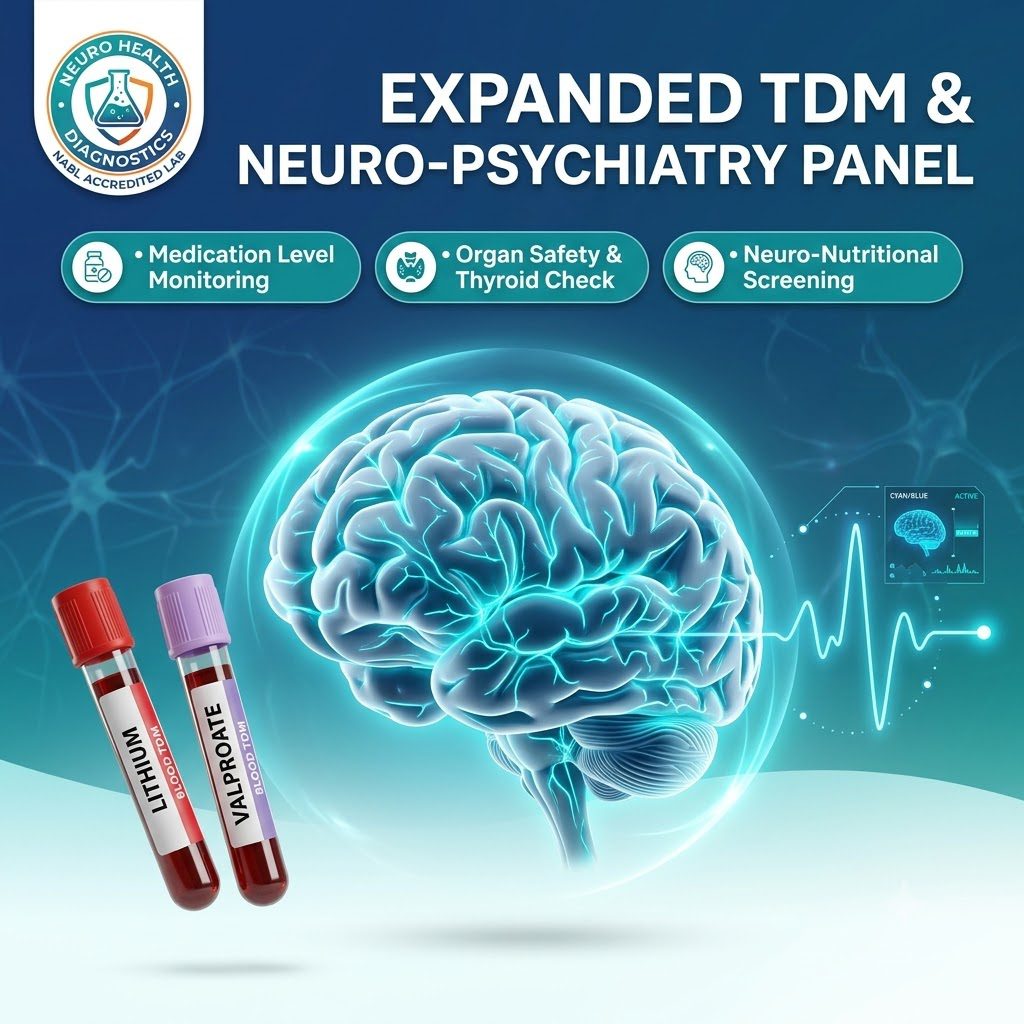
The Expanded Therapeutic Drug Monitoring (TDM) & Neuro-Psychiatry Panel is a specialized precision-medicine profile designed to evaluate blood drug concentrations and vital biochemical markers in patients undergoing long-term treatment for neurological, mood, and psychiatric disorders.
Psychotropic and anti-seizure medications often have a narrow therapeutic index—meaning the gap between a dose that is clinically effective and one that causes toxic side effects is extremely small. Individual factors such as metabolism, liver enzyme activity, and concurrent prescriptions can cause drug levels to spike or crash unexpectedly. This panel allows psychiatrists and neurologists to objectively verify treatment compliance, prevent breakthrough seizures or mood relapses, eliminate medication toxicity, and rule out organic metabolic causes of neuropsychiatric symptoms.
What’s Included in the Panel
This comprehensive panel groups critical assessments into three logical clinical tiers:
1. Targeted Therapeutic Drug Monitoring (TDM)
Measures exact circulating serum concentrations of first- and second-line neuro-psychotropic medications to ensure patients remain within the safe efficacy window.
Serum Lithium: Essential for patients managing Bipolar Disorder. Lithium requires vigilant monitoring to prevent severe renal, thyroid, and neuro-toxicity while preventing manic or depressive relapses.
Serum Valproic Acid (Sodium Valproate): Widely used for epilepsy, migraine prevention, and mood stabilization. TDM prevents hepatotoxicity and thrombocytopenia while ensuring anti-seizure efficacy.
Serum Carbamazepine: Monitored in seizure disorders, trigeminal neuralgia, and bipolar mood management to prevent bone marrow suppression, dizziness, and ataxia.
Serum Phenytoin: Evaluated in seizure management. Due to its complex non-linear saturation kinetics, small dosage adjustments can cause sudden toxic spikes, making routine monitoring mandatory.
2. Neuro-Metabolic & Organ Safety Screening
Long-term neuropsychiatric drug therapy can place significant metabolic stress on the liver, kidneys, and endocrine system.
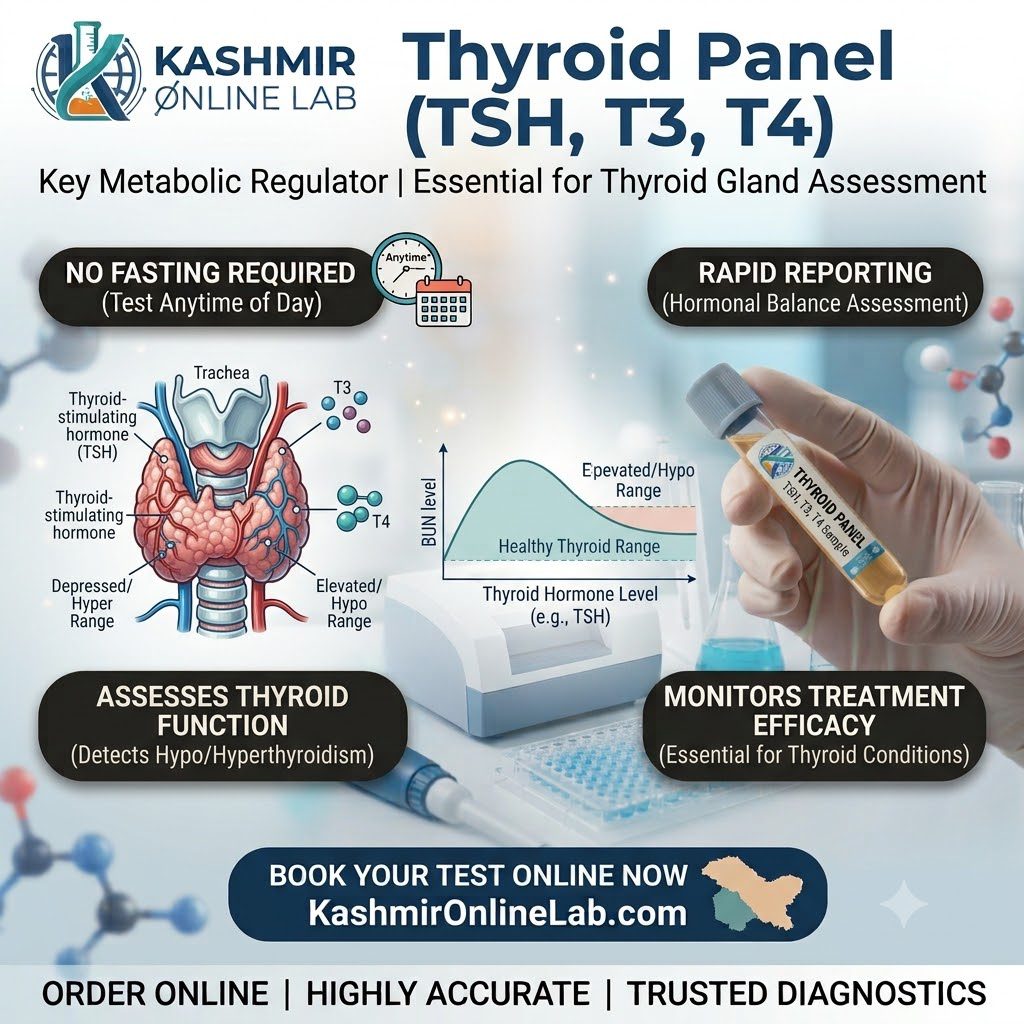
Thyroid Profile (TSH, Free T3, Free T4): Crucial for two reasons: thyroid dysfunction directly mimics depression and anxiety, and long-term Lithium therapy is a known cause of drug-induced hypothyroidism.
Liver Function Test (LFT) – Focus on ALT, AST & GGT: Medications like Valproate and Carbamazepine are metabolized by the liver; asymptomatic enzyme elevation can signal early drug-induced liver injury (DILI).
Renal Function Test (Serum Creatinine, BUN, eGFR): Checks clearance capacity. Because Lithium is cleared almost exclusively by the kidneys, impaired renal function can rapidly lead to fatal drug accumulation.
Serum Electrolytes (Sodium, Potassium, Chloride): Anti-seizure drugs and mood stabilizers can cause dangerous electrolyte imbalances, such as Carbamazepine-induced hyponatremia (low sodium), which can trigger confusion and breakthrough seizures.
3. Neuro-Nutritional Baseline
Identifies reversible nutritional deficiencies that impair cognitive function, worsen depressive symptoms, and cause neuropathy.
Serum Vitamin B12 & Folate: Essential cofactors in myelin synthesis and neurotransmitter production (serotonin, dopamine). Deficiencies are directly linked to treatment-resistant depression, memory loss, and fatigue.
25-Hydroxy Vitamin D: Severe Vitamin D deficiency is independently associated with mood disorders, seasonal affective decline, and impaired cognitive resilience.
Quick Reference Table for Patients & Caregivers
| Test Component | Primary Application | Key Clinical Target |
| Lithium Level | Bipolar Mood Stabilization | Maintains efficacy window; prevents tremors, renal & thyroid toxicity |
| Valproic Acid Level | Epilepsy & Mood Disorders | Verifies seizure protection; guards against liver toxicity |
| Carbamazepine Level | Seizures & Nerve Pain | Prevents dizziness, ataxia, and blood cell abnormalities |
| Phenytoin Level | Anti-Seizure Management | Navigates complex drug kinetics to prevent neuro-toxicity |
| Thyroid Profile (TSH/FT4) | Mood vs. Metabolic Check | Rules out thyroid-induced depression; monitors Lithium side effects |
| LFT & Renal Panel | Organ Safety Screening | Ensures liver and kidneys are safely clearing daily medications |
| Electrolytes & B12/D | Neuro-Nutritional Health | Prevents low-sodium confusion and cofactor-deficiency depression |
Patient Preparation & Specimen Details
Sample Type: Whole Blood (Serum & EDTA).
Fasting Requirement: 8 to 12 hours of overnight fasting is mandatory.
Crucial Timing Instructions (The “Trough” Level): For accurate TDM, blood must be drawn strictly at trough level—meaning immediately before the patient takes their morning dose of medication (typically 12 hours after the last evening dose). Taking the morning medication before the blood draw will cause falsely spiked, inaccurate toxicity readings.
Turnaround Time (TAT): 12 to 24 hours.
When to Get Tested: Recommended as a baseline every 3 to 6 months during stable therapy, 1–2 weeks after any dosage adjustment, or immediately if a patient experiences tremors, persistent sedation, confusion, or a relapse in seizures/mood symptoms.