Description
HLA-B27 stands for Human Leukocyte Antigen B27. These antigens are proteins found on the surface of white blood cells (leukocytes) in some individuals. They are part of the major histocompatibility complex (MHC) in humans, which helps the immune system distinguish the body’s own cells from foreign substances like bacteria or viruses.
Genetic Marker: HLA-B27 is primarily a genetic marker. While not all individuals with this antigen develop an associated disease, it is strongly linked to a specific group of autoimmune diseases called Spondyloarthritides.
Clinical Indications & Utility
Your doctor may order this test if you are showing symptoms suggestive of one of the conditions associated with HLA-B27, especially:
Ankylosing Spondylitis (AS): The strongest association. Over 90% of individuals with classic AS are HLA-B27 positive. Symptoms include chronic lower back pain and stiffness, especially in young adults, which worsens with rest and improves with activity. Important: Being positive does not guarantee you will develop AS, and a negative result does not completely rule it out.
Reactive Arthritis: Arthritis that develops after an infection elsewhere in the body (e.g., gut or urinary tract).
Psoriatic Arthritis: Arthritis associated with the skin condition psoriasis.
Enteropathic Arthritis: Arthritis linked to inflammatory bowel diseases (Crohn’s disease or Ulcerative Colitis).
Anterior Uveitis: A form of eye inflammation that can occur repeatedly.
Utility of the Test:
Support Diagnosis: To help support a clinical diagnosis when a patient presents with symptoms characteristic of the conditions mentioned, particularly Ankylosing Spondylitis.
Differentiate Causes: To distinguish between inflammatory causes of joint and back pain and non-inflammatory causes.
Risk Assessment: In family members with similar symptoms or a strong family history, it can help assess susceptibility to these conditions, though results must be interpreted with caution.
How the Test Works: PCR Method
PCR stands for Polymerase Chain Reaction. It is a laboratory technique used to amplify and detect specific sequences of DNA. In the context of the HLA B27 test, PCR-based testing is now common and preferred for its accuracy and sensitivity.
Direct DNA Detection: Unlike older antibody-based tests (like flow cytometry), which detect the protein on the cell surface, the PCR method directly detects the presence of the HLA-B27 gene sequence in the patient’s DNA.
Advantages of PCR:
High Sensitivity & Specificity: Highly accurate in detecting the presence or absence of the specific genetic marker.
Minimal Sample Required: Needs very small amounts of blood.
Independent of Protein Expression: Can detect the gene even if the protein is expressed at low levels on the cell surface or if the patient’s immune system is suppressed, which might affect other methods.
How is the Sample Collected?
The test is a blood draw, typically performed by a trained healthcare professional (e.g., a phlebotomist) in a clinic or diagnostic lab.
Sample Type: A small amount of whole blood is drawn from a vein in your arm, usually into a tube containing an anticoagulant (often EDTA, which helps preserve DNA).
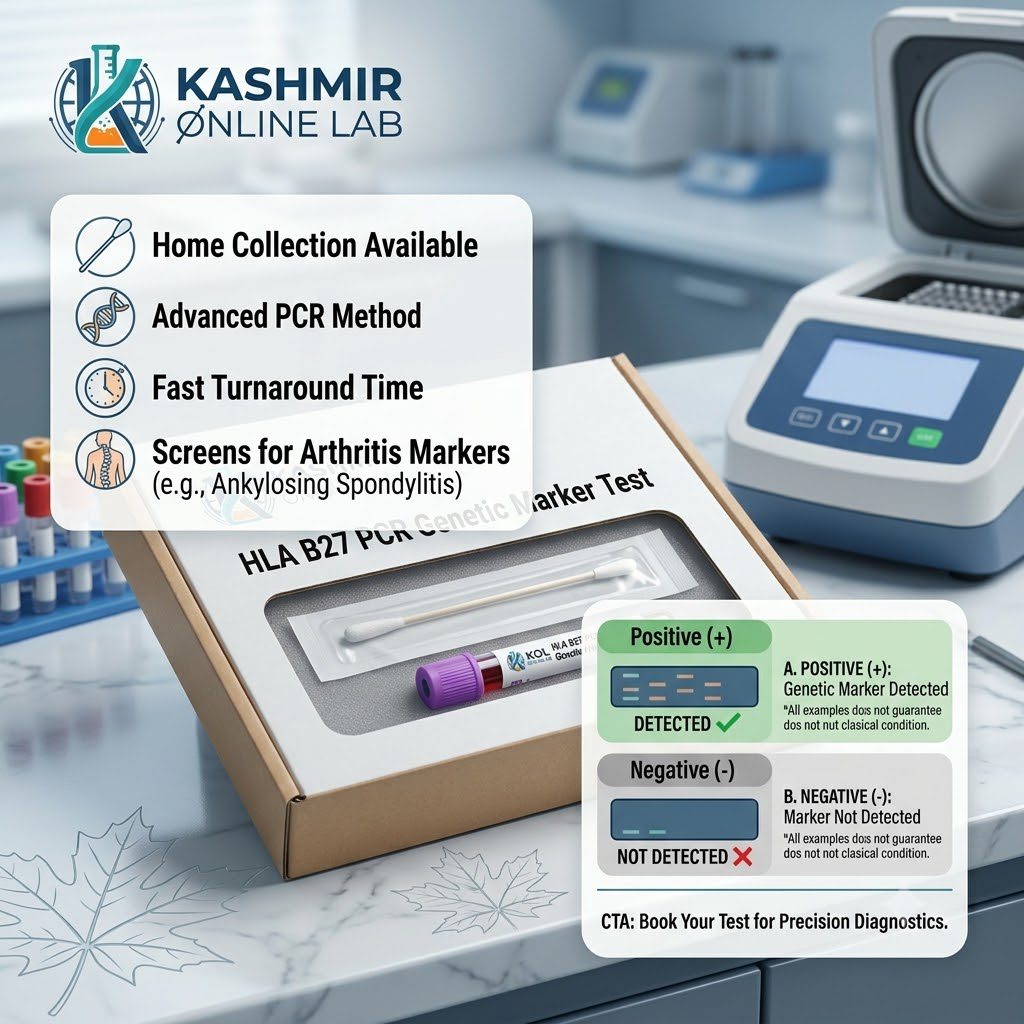
Turnaround Time: Results are typically available within 2-3 business days, though this can vary by lab.
Considerations & Interpretation
A Positive Result:
Indicates you have the HLA-B27 genetic marker.
Does NOT diagnose any condition on its own.
Increases the risk of spondyloarthritides and associated inflammatory diseases.
Must be interpreted by your doctor in the context of your symptoms, medical history, physical examination, and other findings (such as imaging).
A Negative Result:
Indicates you do NOT have the specific HLA-B27 genetic marker.
Lowers the likelihood of spondyloarthritides, but does not completely rule out the possibility of these conditions.
Consult Your Doctor: Your doctor will explain the results, what they mean for your health, and if further testing or treatment is needed. Do not make any health decisions or changes to your medication based solely on this test result.