Description
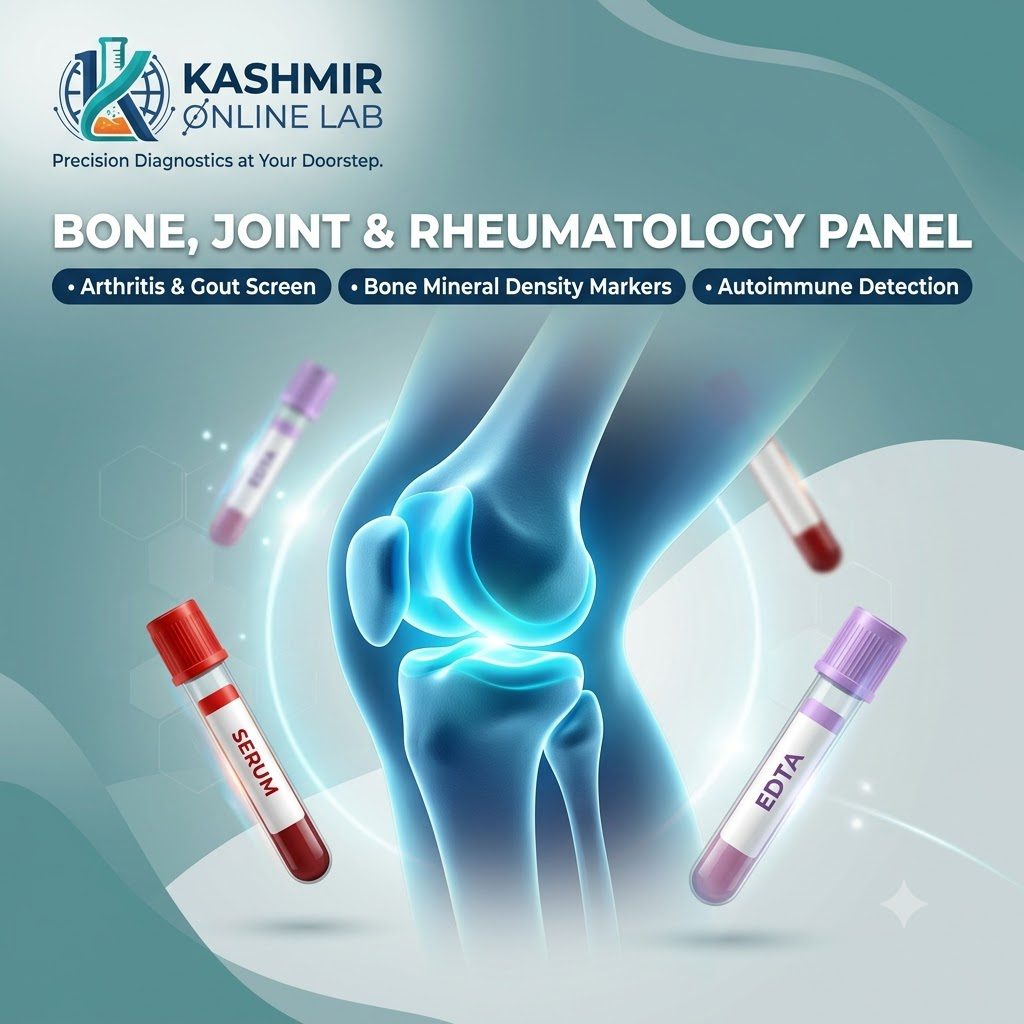
The Bone, Joint & Rheumatology Panel is a comprehensive diagnostic screening designed to evaluate bone strength, joint health, systemic inflammation, and autoimmune activity.
Chronic joint pain, morning stiffness, swelling, and deep bone fatigue can stem from vastly different underlying causes—ranging from simple nutritional deficiencies (like Vitamin D or Calcium lack) and metabolic disorders (like Gout) to progressive autoimmune diseases (such as Rheumatoid Arthritis or Lupus). This panel provides clinicians with a complete biomarker profile to differentiate between mechanical wear-and-tear (osteoarthritis), metabolic bone disease, and inflammatory autoimmune arthropathies, enabling early intervention before irreversible joint erosion occurs.
What’s Included in the Panel
This comprehensive panel groups essential biomarkers into three logical clinical tiers:
1. Bone Metabolism & Mineral Health
Evaluates the structural integrity of the skeletal system and the biochemical balance required for bone remodeling and muscle function.
Serum Calcium (Total & Ionic): Essential for bone density, nerve transmission, and muscular contraction. Low levels can trigger compensatory bone resorption.
Phosphorus (Inorganic): Works in tandem with calcium to form hydroxyapatite, the primary mineral matrix of bone and teeth.
Alkaline Phosphatase (ALP): An enzyme elevated during active bone turnover, healing fractures, osteomalacia, or conditions like Paget’s disease.
25-Hydroxy Vitamin D [25(OH)D]: The definitive measure of total body Vitamin D stores, critical for intestinal calcium absorption and preventing osteopenia and osteoporosis.
2. Inflammatory & Metabolic Arthropathy Markers
Identifies active joint inflammation and metabolic imbalances that cause crystal deposition in joints.
Erythrocyte Sedimentation Rate (ESR): A baseline indicator of systemic inflammation, commonly elevated in chronic inflammatory arthropathies.
C-Reactive Protein (CRP) – Quantitative: An acute-phase liver protein that surges during active inflammatory flare-ups, helping gauge disease severity and response to therapy.
Serum Uric Acid: Measures uric acid levels in the blood. Hyperuricemia leads to needle-like monosodium urate crystal deposits in joint spaces, causing acute Gouty Arthritis.
3. Autoimmune & Rheumatology Screening
Targeted immunoassays to detect autoantibodies that attack synovial joint linings and connective tissues.
Rheumatoid Factor (RF) – Quantitative: Autoantibodies against the Fc portion of IgG; a primary first-line screening marker for Rheumatoid Arthritis (RA) and Sjogren’s syndrome.
Anti-Cyclic Citrullinated Peptide (Anti-CCP / ACPA): A highly specific (~95–98%) and sensitive biomarker for Rheumatoid Arthritis. It can detect aggressive RA early—often years before structural joint damage appears on X-rays.
Anti-Nuclear Antibody (ANA) Screen: Evaluates antibodies directed against cell nuclei, serving as a critical gateway screening for systemic autoimmune connective tissue disorders such as Systemic Lupus Erythematosus (SLE), scleroderma, and polymyositis.
Quick Reference Table for Patients
| Test Component | Target Condition / Purpose | Key Clinical Indicator |
| Calcium, Phosphorus & ALP | Bone density & remodeling | Identifies mineral deficiencies & high bone turnover |
| Vitamin D [25(OH)D] | Osteoporosis / Bone weakness | Low levels lead to brittle bones & muscle weakness |
| Uric Acid | Gouty Arthritis | High levels cause painful crystal deposits in joints |
| ESR & CRP (Quantitative) | Active Joint Inflammation | Spikes indicate acute or ongoing inflammatory flare-ups |
| Rheumatoid Factor (RF) | Autoimmune Joint Disease | General screening antibody for Rheumatoid Arthritis |
| Anti-CCP (ACPA) | Early & Aggressive RA | Highly specific marker confirming Rheumatoid Arthritis |
| ANA Screen | Systemic Autoimmune Disease | Screens for Lupus (SLE) & connective tissue disorders |
Patient Preparation & Specimen Details
Sample Type: Whole Blood (Serum & EDTA).
Fasting Requirement: 8 to 10 hours of overnight fasting is recommended to ensure optimal accuracy for baseline mineral and metabolic markers. Water is permitted.
Turnaround Time (TAT): 12 to 24 hours.
When to Get Tested: Recommended for individuals experiencing joint swelling, morning joint stiffness lasting over 30 minutes, unexplained lower back pain, recurring big toe pain, or generalized bone tenderness.