Description
The ACE Serum Test is a primary blood test used to help diagnose and monitor sarcoidosis, an inflammatory disease that causes small lumps of cells (granulomas) to form in organs, most commonly the lungs. Specialized cells within these granulomas produce ACE, making it a valuable indirect indicator of disease activity.
Angiotensin Converting Enzyme (ACE) is an enzyme produced throughout the body, but it is primarily found in high concentrations in the small blood vessels of the lungs. Its standard job is to help regulate blood pressure by converting angiotensin I into angiotensin II, which constricts blood vessels. However, in certain inflammatory conditions, especially sarcoidosis, the specialized cells that form inflammatory masses known as granulomas begin to produce and release excessive amounts of ACE into the bloodstream. Measuring ACE in the blood (serum) serves as an indirect but effective way to detect and quantify these hidden masses of cells.
Clinical Significance:
- Sarcoidosis Diagnostic Tool: This test is highly specific for detecting sarcoidosis when used in conjunction with other clinical evidence (e.g., medical history, lung X-rays, or biopsies). An elevated result in a patient with consistent symptoms strongly suggests a sarcoidosis diagnosis.
- Monitoring Disease Activity: If ACE levels are found to be high at the time of diagnosis, the test is an excellent tool for monitoring the effectiveness of treatment (typically corticosteroids) or tracking the natural course of the disease. A drop in ACE levels indicates improvement or remission, while a rise may signal a flare-up.
- Differentiating Conditions: While not 100% specific, ACE levels can help differentiate sarcoidosis from other lung or systemic conditions that share similar symptoms, such as lymphoma, tuberculosis, or lung cancer.
When is this test recommended?
Healthcare providers typically order an ACE Serum Test when a patient presents with symptoms consistent with sarcoidosis, including:
- A persistent, dry cough.
- Difficulty breathing or shortness of breath.
- Severe or persistent fatigue.
- Sudden weight loss.
- Swollen lymph nodes (especially in the chest, visible on X-ray).
Sample Requirements:
- Specimen: Blood (Serum).
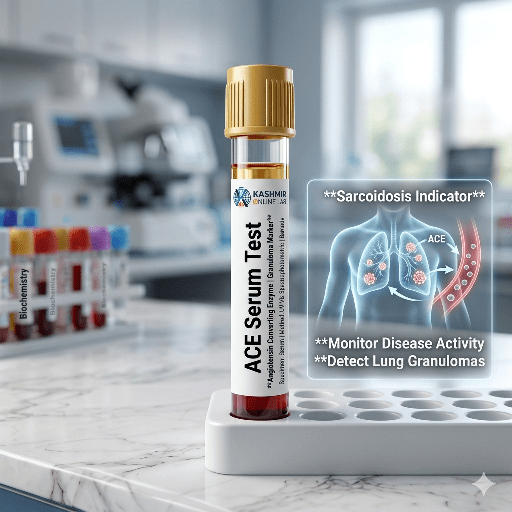
- Container: A standard Gold-top Serum Separator Tube (SST) (as pictured), containing a clot activator and separation gel.
Patient Preparation:
- General: Typically, no fasting is required. Patients can eat and drink normally before the test.
- Medications: It is vital to inform your healthcare provider about all medications you are taking, especially blood pressure medications (such as ACE inhibitors), as they can directly impact the test results.