Description
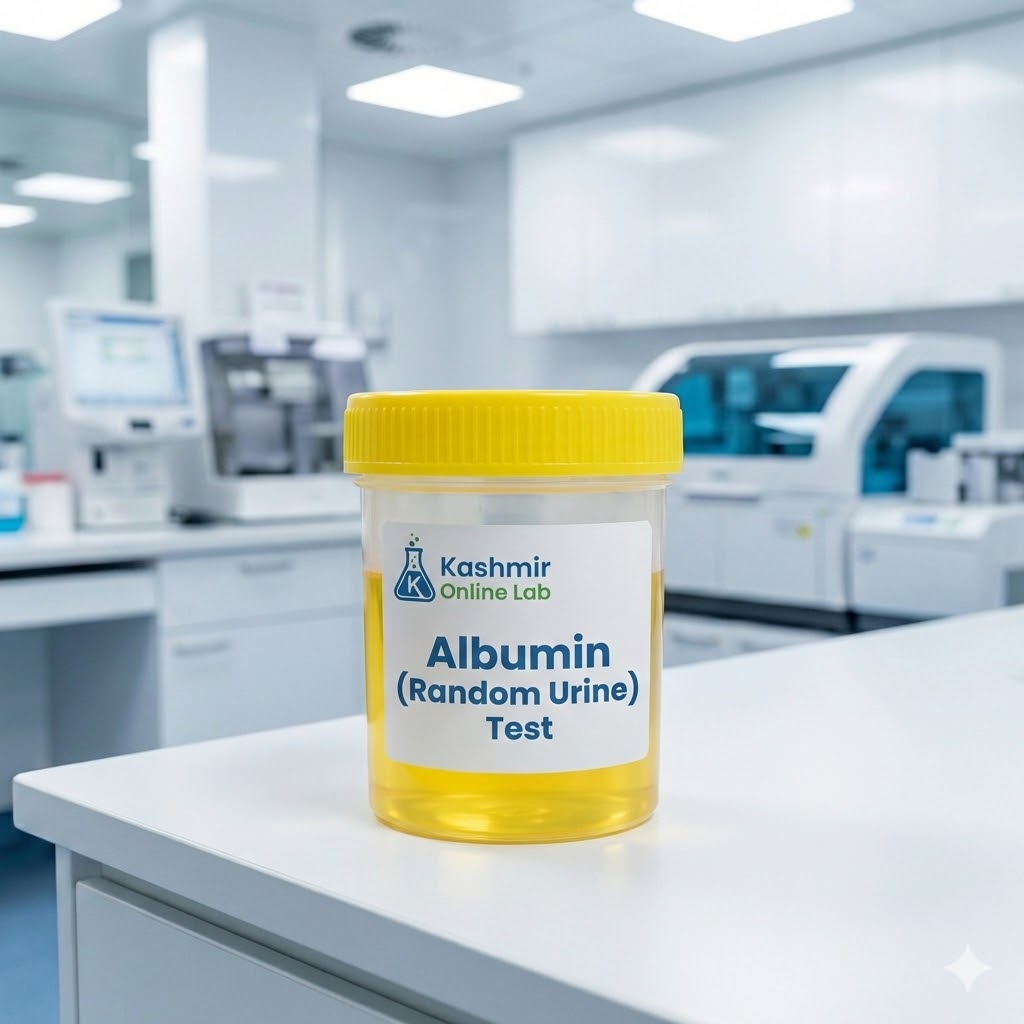
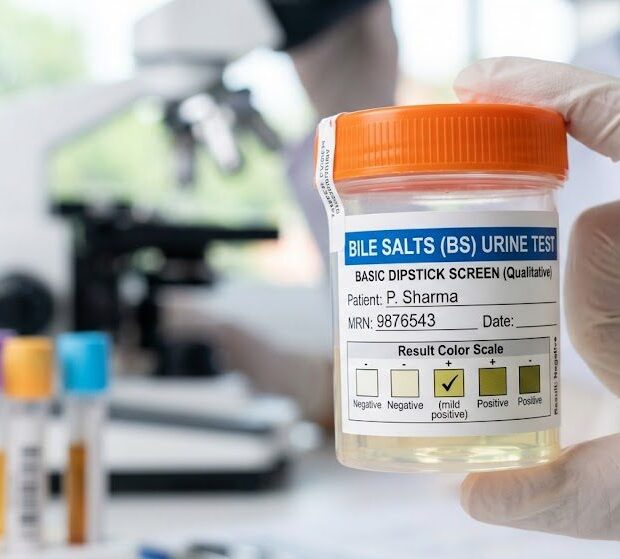
The Bile Salts (BS) Urine – Urine Test (Basic) is a qualitative screening assay used to detect the presence of bile acids and bile salts in a urine specimen. Normal urine does not contain bile salts. Bile salts are essential components of bile, synthesized from cholesterol by the liver, stored in the gallbladder, and excreted into the intestine to aid in fat digestion. Their abnormal presence in urine, known as cholic aciduria, typically occurs when there is liver dysfunction or an obstruction of the biliary tract (cholestasis), preventing normal bile flow into the digestive tract and causing them to enter the bloodstream and filter into the urine.
Clinical Significance:
A “Positive” result for Bile Salts in urine is a non-specific but strong indicator of liver and/or biliary system disease. Key indications for this test include:
Obstructive Jaundice: It is often ordered alongside tests for bilirubin to differentiate between types of jaundice.
Cholestasis: Particularly useful in identifying Intrahepatic Cholestasis of Pregnancy (ICP).
Hepatocellular Damage: May be elevated in hepatitis or cirrhosis.
Pruritus (Severe Itching): Sometimes the presence of bile salts under the skin triggers severe itching, and the urine test helps confirm the cause.
Testing Method (Basic):
The basic urine screening method typically uses a qualitative or semi-quantitative approach, such as colorimetric reagent strip detection (a modified dipstick). The test zone on the strip contains reagents that react specifically with bile salts, causing a characteristic color change. The intensity of the color is then compared to a reference color scale, ranging from Negative to varying degrees of Positive (often indicated as +, ++, or +++).