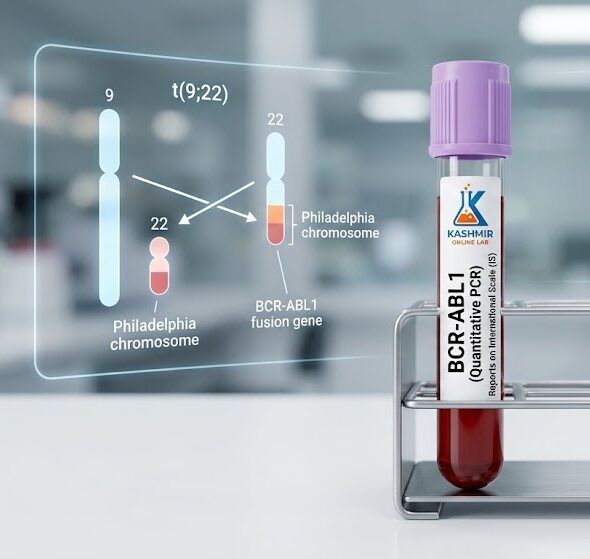
Description
Human Papillomavirus (HPV) is a very common sexually transmitted infection. While most HPV infections are transient and cleared naturally by the immune system, persistent infection with “high-risk” (oncogenic) HPV types can lead to cellular changes that progress to cervical, vaginal, vulvar, or oropharyngeal cancers.
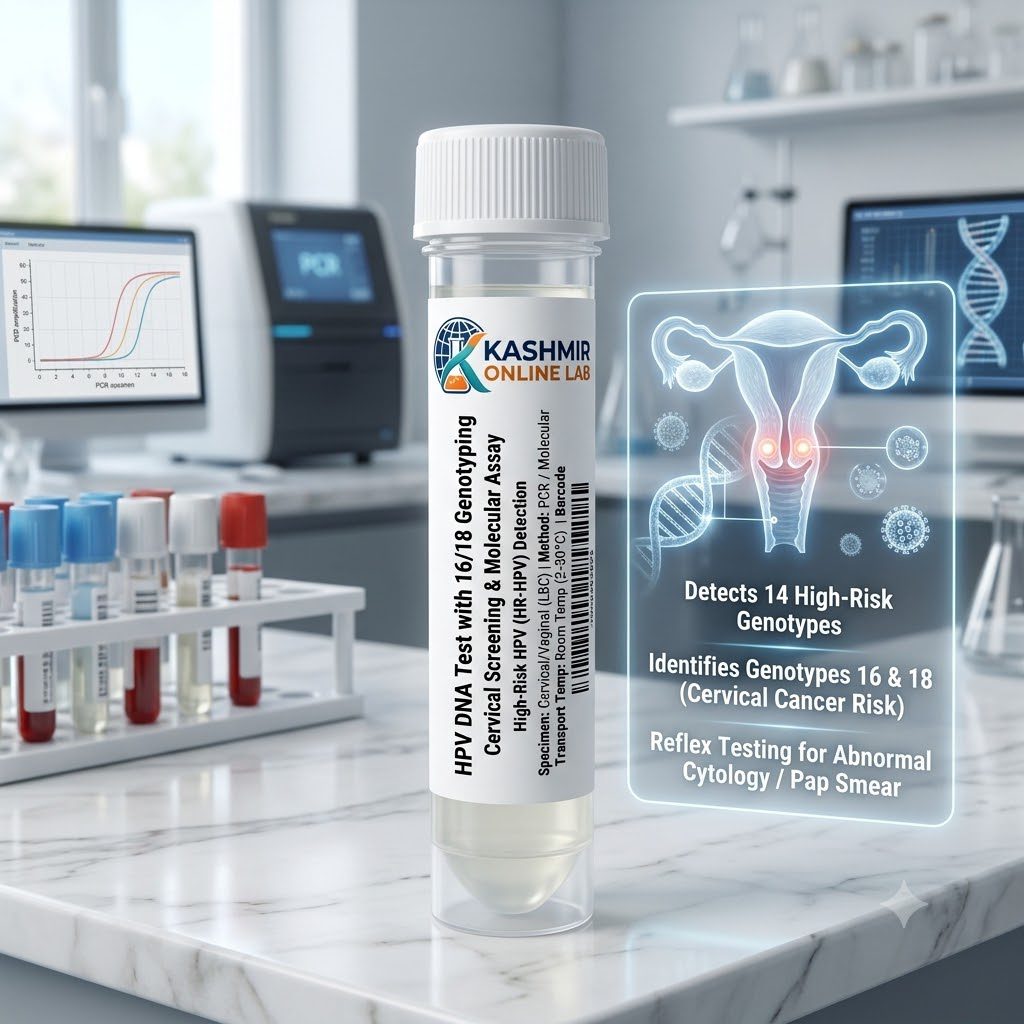
The HPV (Human Papillomavirus) DNA Test with 16/18 Genotyping utilizes advanced molecular multiplex Real-Time PCR (Polymerase Chain Reaction) to detect the genetic material (DNA) of 14 high-risk HPV types (HPV 16, 18, 31, 33, 35, 39, 45, 51, 52, 56, 58, 59, 66, and 68). Crucially, this test specifically isolates and identifies (genotypes) HPV 16 and HPV 18, offering key risk-stratification information to determine if colposcopy (visual cervix inspection) or closer clinical monitoring is needed, rather than just repeating a standard screening.
Clinical Significance & Clinical Utility
Primary Cervical Cancer Screening: Since high-risk HPV infection is the underlying cause of virtually all cervical cancers, this test offers greater sensitivity than a Pap smear alone, identifying risk years before abnormal cell changes actually appear.
Specific Genotyping for 16 & 18: HPV 16 and 18 carry the absolute highest risk for progression to high-grade cervical dysplasia (CIN 2/3) or adenocarcinoma. Genotyping allows clinicians to immediately refer high-risk-positive individuals for colposcopy, even if their Pap smear appears normal.
Triage for Borderline/Abnormal Cytology (ASC-US): Used as a reflex test following an equivocal “Pap smear” (ASC-US results) to determine if a patient needs further invasive diagnostic procedures like biopsy/colposcopy.
Co-Testing Strategy: Often performed concurrently with cervical cytology (Pap test) in individuals aged 30 to 65 to extend the safe interval between screenings up to 5 years if both are negative.
Test Interpretation
| Result Status | Clinical Interpretation | Recommended Action / Follow-up |
| Negative | No DNA from 14 high-risk HPV genotypes detected. Normal baseline. | Resume routine age-based screening (usually every 3 to 5 years, depending on whether co-testing or standalone testing is used). |
| Positive for HPV 16 and/or 18 | High-risk genotypes 16 and/or 18 detected, indicating the highest risk category for cervical dysplasia or cancer. | Prompt referral for a colposcopy (detailed cervical exam) and potentially a biopsy, even if Pap cytology was normal. |
| Positive for Other HR-HPV | Positive for one or more of the 12 other high-risk genotypes (31, 33, 35, 39, 45, 51, 52, 56, 58, 59, 66, 68). | If Pap is Normal: Repeat HPV and cytology in 12 months.
If Pap is abnormal (ASC-US or higher): Refer for colposcopy. |
| Unsatisfactory / Invalid | Inadequate cellular material or assay failure. | Recall the patient for repeat specimen collection. |
Test Requisites & Patient Preparation
To ensure high-quality sample collection and prevent assay interference:
Temporal Planning: Scheduling must ideally avoid the menstrual period (though mild bleeding does not invalidate the test, a clearer sample is obtained mid-cycle).
Precise Obstruction Window (48 Hours): For 48 hours prior to the appointment, the patient must completely avoid:
Sexual intercourse.
Douching.
Using vaginal medicines, suppositories, or contraceptives (including spermicides, foams, creams, or jellies).
Method of Collection: Performed by a healthcare provider using an endocervical brush, broom, or swab during a speculum exam, which is then immediately swirled and preserved in a Liquid-Based Cytology (LBC) vial (such as ThinPrep or SurePath PreservCyt solution). Vaginal self-collect brush kits may be used where clinically eligible.