Description
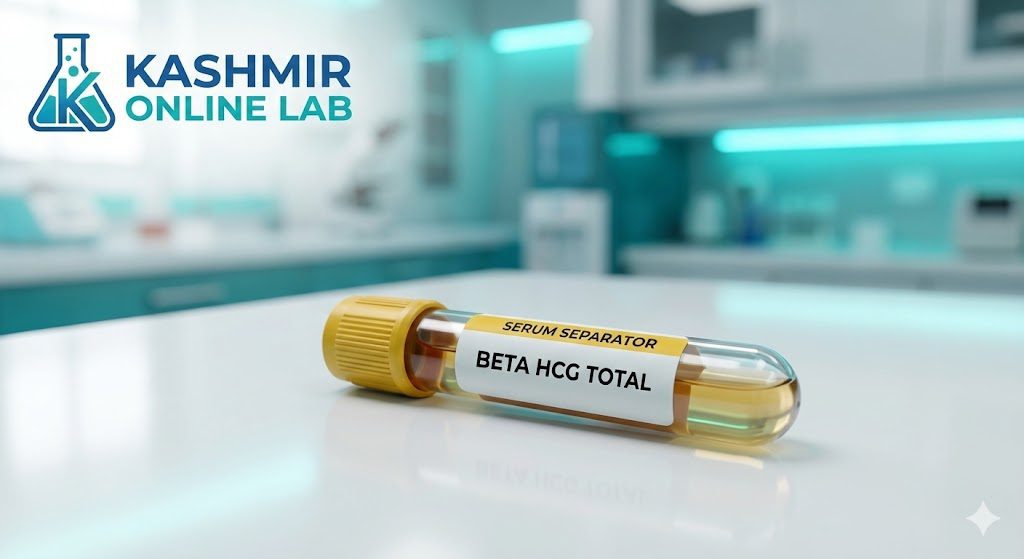
Overview: This test measures the total amount of human chorionic gonadotropin (hCG)—both the intact hormone and the free beta subunits—in the blood. It is often referred to as a “quantitative pregnancy test” because it provides a specific number (concentration) rather than just a positive or negative result.
Clinical Significance:
Pregnancy Monitoring: hCG levels typically double every 48-72 hours in early pregnancy. Measuring “serial” levels (tests taken days apart) helps evaluate if a pregnancy is progressing normally.
Ectopic Pregnancy: If hCG levels are rising slower than expected or plateauing, it may indicate a pregnancy outside the uterus (ectopic pregnancy) or a potential miscarriage.
Tumor Marker: Like the Free Beta test, very high levels of Total hCG in non-pregnant individuals can be a marker for germ cell tumors or gestational trophoblastic disease.
When is this test recommended?
To confirm pregnancy at the earliest possible stage (often detectable before a missed period).
To monitor the safety of a pregnancy when there is vaginal bleeding or abdominal pain.
To screen for molar pregnancy.
To monitor patients after miscarriage or abortion to ensure no tissue remains.
Sample Requirements:
Specimen: Serum.
Container: Gold Top (SST) or Red Top Tube.
Preparation: No fasting is typically required.