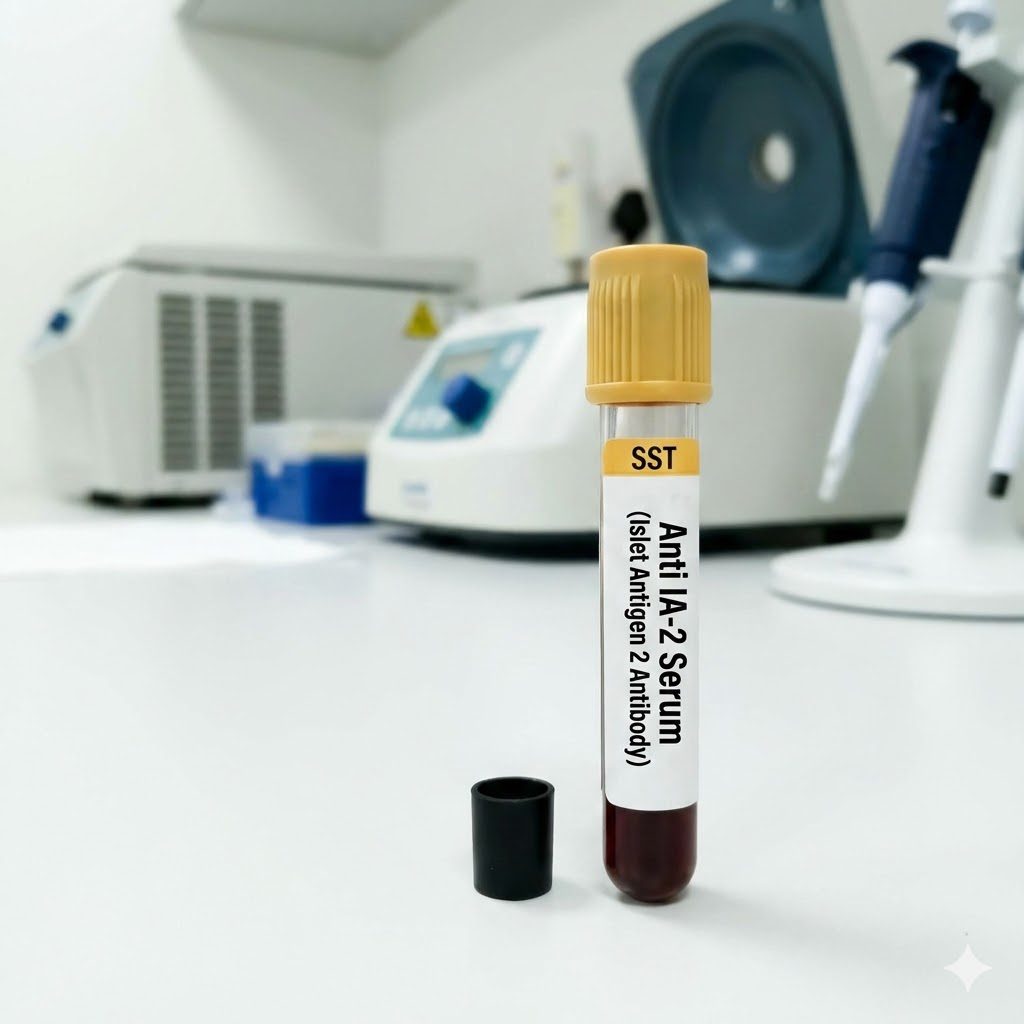
Description
The Anti-IA-2 Antibody Test helps diagnose Type 1 Diabetes. It detects antibodies that attack the insulin-producing cells in the pancreas. This test is crucial for distinguishing between Type 1 (autoimmune) and Type 2 diabetes, especially in children and young adults.
Overview: Insulinoma-Associated-2 (IA-2) is a protein found in the beta cells of the pancreas—the cells responsible for making insulin. In Type 1 Diabetes, the body’s immune system mistakenly identifies these proteins as foreign and produces antibodies (Anti-IA-2) to destroy them. Detecting these antibodies confirms that the diabetes is caused by an autoimmune reaction.
Clinical Significance:
Diagnosing Type 1 Diabetes: Anti-IA-2 is one of the most specific markers for Type 1 Diabetes. It is present in about 60-70% of newly diagnosed patients.
Differentiating Types: It helps doctors determine if a patient has Type 1 Diabetes (requires insulin immediately) or Type 2 Diabetes (often managed with lifestyle/pills), which is critical for choosing the right treatment.
Predictive Screening: In people with a family history of Type 1 Diabetes, the presence of these antibodies can predict the risk of developing the disease years before symptoms appear.
LADA (Latent Autoimmune Diabetes in Adults): It helps identify adults who are misdiagnosed with Type 2 diabetes but actually have a slow-progressing form of autoimmune diabetes.
When is this test recommended?
When a child or young adult is diagnosed with diabetes, to confirm the type.
If an adult diabetic is not responding to standard oral medications (suspected LADA).
For screening siblings or close relatives of Type 1 Diabetics to assess their risk.
It is often ordered as part of a panel alongside GAD65 and Insulin Autoantibodies (IAA).
Sample Requirements:
Specimen: Serum (Blood).
Container: Gold Top (SST) or Red Top Tube.
Preparation: No special preparation or fasting is required.