Description
The Acetylcholine Receptor Binding Antibody Test is the primary diagnostic blood test for autoimmune Myasthenia Gravis (MG). It detects and quantifies specific antibodies that block the communication between nerves and muscles, leading to muscle weakness. Positive results are highly specific for MG.
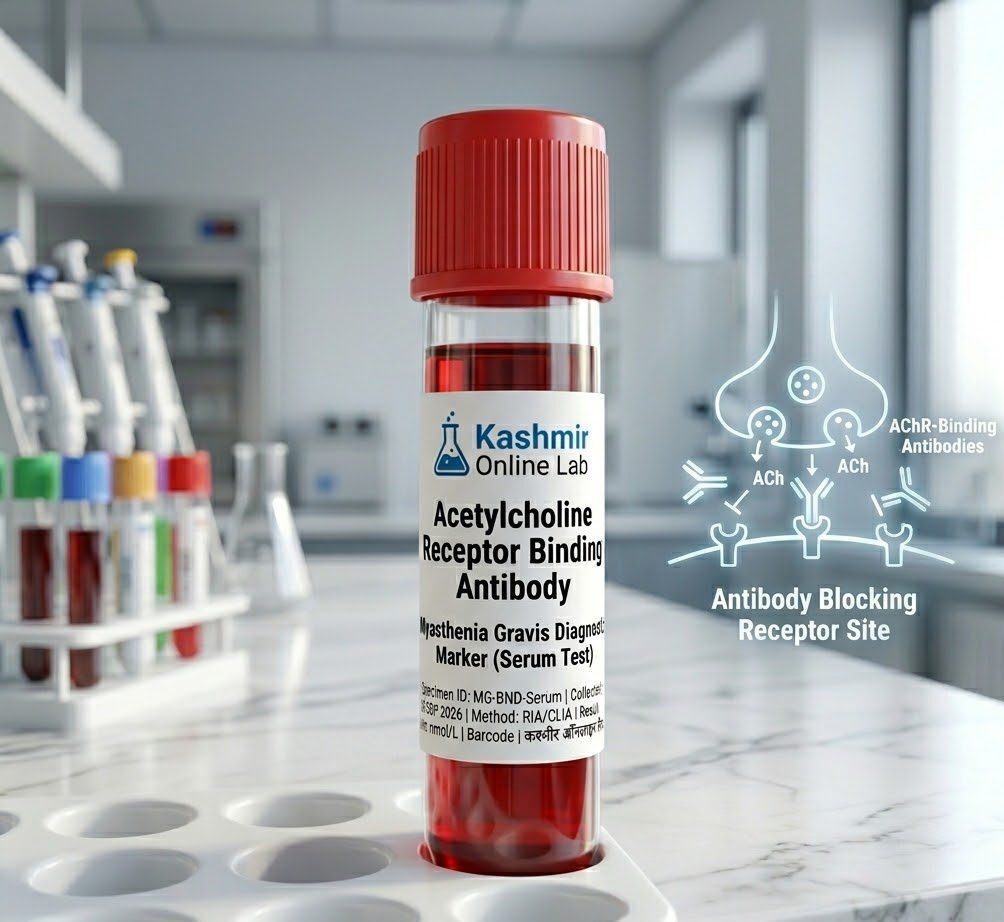
Overview: This blood test measures the concentration of Acetylcholine Receptor (AChR) Binding Antibodies in the serum. In autoimmune Myasthenia Gravis (MG), the body’s immune system mistakenly produces these antibodies. They target and bind to the acetylcholine receptors on the surface of muscle cells at the neuromuscular junction. By blocking the receptors, these antibodies prevent the neurotransmitter acetylcholine (which is released by nerve endings) from binding to the muscle and triggering a contraction, resulting in characteristic muscle weakness and fatigue.
Clinical Significance:
Gold Standard Diagnosis: This test is the first-line and most crucial blood test for diagnosing autoimmune Myasthenia Gravis. Approximately 85% of patients with generalized MG and about 50% of patients with ocular MG have detectable levels of AChR binding antibodies.
High Specificity: The presence of these antibodies is highly specific for autoimmune MG, meaning false positive results are very rare.
Monitoring: While antibody levels do not always correlate perfectly with symptom severity, this test may sometimes be used to monitor response to therapy in certain patients.
When is this test recommended? Healthcare providers order this test when a patient exhibits symptoms suggestive of Myasthenia Gravis, which typically include muscle weakness that worsens with activity and improves with rest. Common symptoms include:
Drooping of one or both eyelids (ptosis).
Blurred or double vision (diplopia).
Difficulty swallowing or chewing.
Slurred speech.
Weakness in the neck, arms, or legs.
Shortness of breath (due to weakness of the respiratory muscles).
Sample Requirements:
Specimen: Blood (Serum).
Container: Red-top tube or Serum Separator Tube (SST).
Preparation: Typically, no fasting is required before this blood test. However, patients should consult their doctor regarding the timing of the sample collection relative to any treatments, as certain immunosuppressant therapies can lower antibody levels.