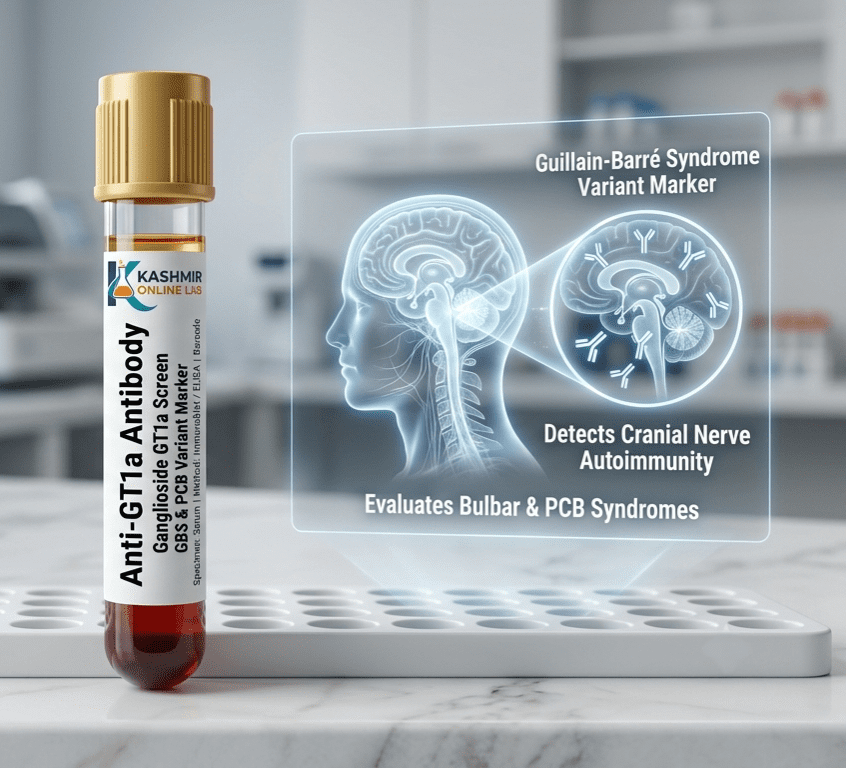
Description
Anti-GT1a Antibody (Ganglioside GT1a)
Overview: Gangliosides are molecules found on the surface of nerve cells. Sometimes, the immune system mistakenly attacks these molecules, causing nerve damage. Anti-GT1a antibodies are a specific type of autoantibody that targets the nerves controlling the muscles of the head, neck, and upper body. This test is often performed as part of a comprehensive “Ganglioside Antibody Panel” alongside Anti-GQ1b and Anti-GM1.
Clinical Significance:
Guillain-Barré Syndrome (GBS) Variants: A positive result is a strong marker for the Pharyngeal-Cervical-Brachial (PCB) variant of GBS. Patients with this variant typically experience difficulty swallowing (dysphagia), neck weakness, and arm weakness, often without the leg weakness seen in typical GBS.
Miller Fisher Syndrome: While Anti-GQ1b is the primary marker for Miller Fisher Syndrome, Anti-GT1a can also be present, often indicating a more severe overlap syndrome (Bickerstaff Brainstem Encephalitis).
Bulbar Palsy: It helps investigate unexplained bulbar palsy (weakness of the face and throat muscles).
When is this test recommended?
When a patient presents with sudden weakness in the neck, arms, and throat.
To distinguish between different types of neuropathy (nerve damage).
If a patient has difficulty swallowing or speaking that developed rapidly after a viral infection.
Sample Requirements:
Specimen: Serum (Blood).
Container: Gold Top (SST) or Red Top Tube.
Preparation: No special preparation or fasting is required.