Description
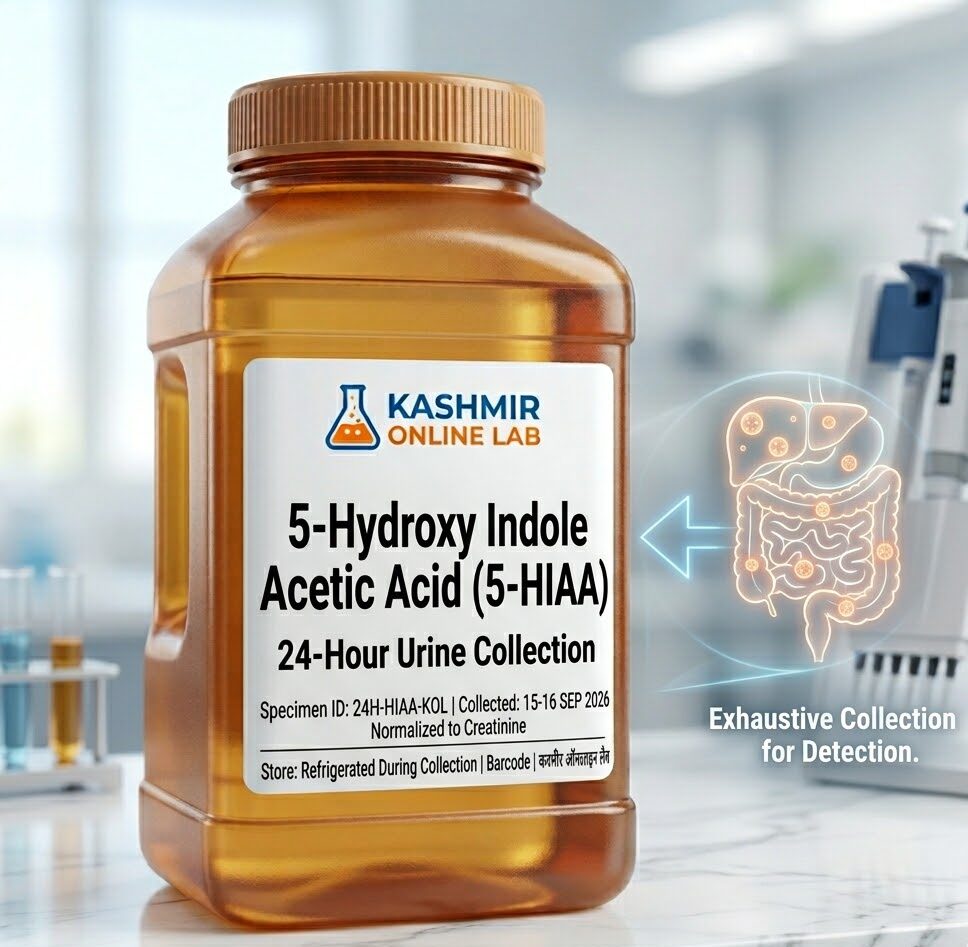
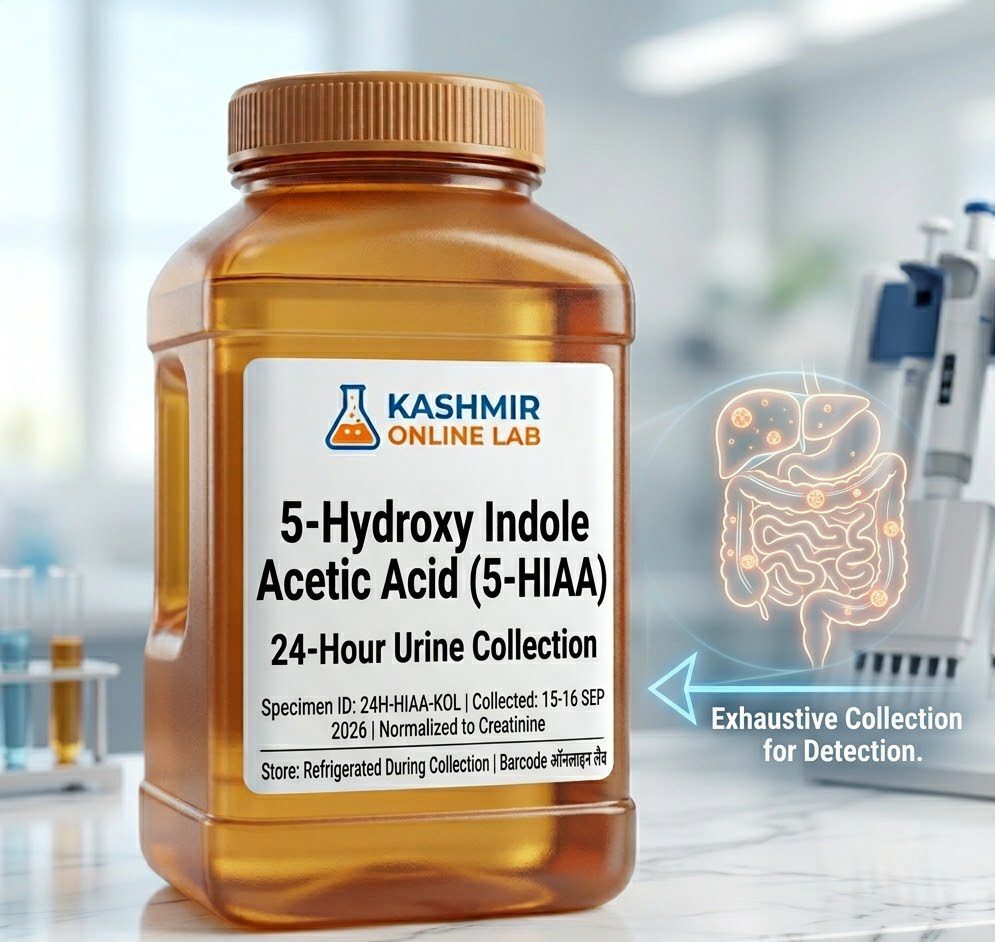
The 5-HIAA (5-Hydroxy Indole Acetic Acid (5-HIAA)- Random Urine) Random Urine Test measures the primary metabolite of serotonin in a single urine sample. Normalized to creatinine, this test serves as an accessible screening tool for neuroendocrine tumors (carcinoid tumors) that produce excess serotonin. It is often recommended when a full 24-hour urine collection is difficult to perform.
Overview: This test measures the level of 5-Hydroxyindoleacetic Acid (5-HIAA) in a single, “random” or “spot” urine sample. 5-HIAA is the primary breakdown product (metabolite) of the hormone serotonin. When interpreted alongside a creatinine measurement (used to normalize the concentration), this spot test offers a convenient and rapid screening method for neuroendocrine disorders.
Clinical Significance:
Carcinoid Tumor Screening: The primary use of this test is to screen for serotonin-secreting neuroendocrine tumors, also known as carcinoid tumors, particularly when they arise in the small intestine and have metastasized to the liver (Carcinoid Syndrome).
Rapid Assessment: While the 24-hour urine 5-HIAA test remains the gold standard, the random sample is ideal for initial screening or when a comprehensive 24-hour collection is impractical.
Monitoring: It may be used to monitor the effectiveness of treatment in patients diagnosed with serotonin-secreting tumors.
When is this test recommended? Healthcare providers may order this test if a patient exhibits symptoms of Carcinoid Syndrome, including:
Unexplained flushing (redness and warmth of the face and neck).
Chronic, watery diarrhea.
Wheezing or difficulty breathing.
Rapid heartbeat.
Sample Requirements:
Specimen: A single, random (spot) urine sample. A mid-stream clean catch is preferred.
Normalizer: A concurrent urine creatinine measurement is required and performed automatically to ensure accurate results interpretation.
Patient Preparation (Crucial): For accurate results, patients must strictly avoid certain serotonin-rich foods and specific medications for 48 hours before collecting the sample, as these can cause false-positive results.
Foods to avoid: Bananas, avocados, pineapples, walnuts, pecans, hickory nuts, kiwi fruit, plums, and tomatoes.
Common medications to review (consult your doctor): Acetaminophen (Tylenol), cough syrups containing guaifenesin, and certain blood pressure medications.