Description
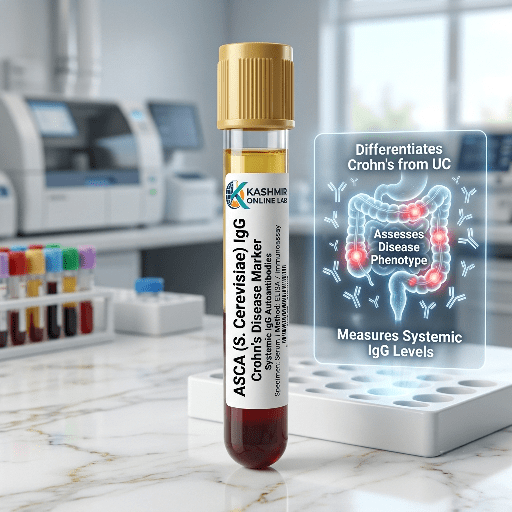
The ASCA (S. Cerevisiae) IgG test is a highly specific blood assay used to help diagnose and manage Inflammatory Bowel Disease (IBD). By detecting Immunoglobulin G (IgG) autoantibodies directed against a specific yeast protein, this test is instrumental in differentiating Crohn’s Disease from Ulcerative Colitis and assessing the potential severity of the condition.
Overview:
Diagnosing Inflammatory Bowel Disease (IBD) and distinguishing between its two primary forms—Crohn’s Disease (CD) and Ulcerative Colitis (UC)—is critical for determining the correct treatment path. The Anti-Saccharomyces Cerevisiae Antibody (ASCA) test detects immune system proteins that mistakenly target Saccharomyces cerevisiae (a common baker’s yeast).
While the ASCA IgA test measures antibodies found primarily in the mucosal linings, the ASCA IgG test measures the most abundant type of antibody in the blood. IgG antibodies represent a systemic, long-term immune response. Testing for both IgG and IgA isotypes simultaneously provides the highest diagnostic sensitivity and a more comprehensive view of the patient’s immune reaction.
Clinical Significance:
- Highly Specific for Crohn’s Disease: ASCA IgG antibodies are strongly associated with Crohn’s Disease. When a patient tests positive for ASCA (IgG/IgA) and negative for pANCA, there is a very high probability that their IBD is Crohn’s Disease rather than Ulcerative Colitis.
- Disease Phenotype and Prognosis: Elevated levels of ASCA IgG are frequently linked to a more complicated disease course. Patients with high titers are statistically more likely to experience stricturing (narrowing of the bowel) or penetrating (fistula-forming) disease, often requiring earlier surgical intervention.
- Comprehensive IBD Panel: This test is rarely ordered in isolation. It is most effective when utilized as part of a comprehensive IBD serology panel alongside ASCA IgA and pANCA, helping gastroenterologists piece together a complex diagnostic puzzle before or alongside endoscopic procedures.
When is this test recommended?
Healthcare providers typically order the ASCA IgG test when:
- A patient is experiencing chronic gastrointestinal symptoms indicative of IBD (e.g., severe abdominal pain, chronic diarrhea, unexplained weight loss).
- Endoscopic or biopsy results are “indeterminate,” meaning the physician cannot confidently distinguish between Crohn’s and UC based on visual inspection alone.
- Assessing the long-term prognosis and potential for complications in a patient newly diagnosed with Crohn’s disease.
Sample Requirements:
- Specimen: Blood (Serum).
- Container: A standard Gold-top Serum Separator Tube (SST).
Patient Preparation:
- General: No specific fasting or dietary restrictions are required before taking this test. However, patients should inform their physician of any current medications, particularly systemic immunosuppressants or biologics, as these may influence antibody levels.