Description
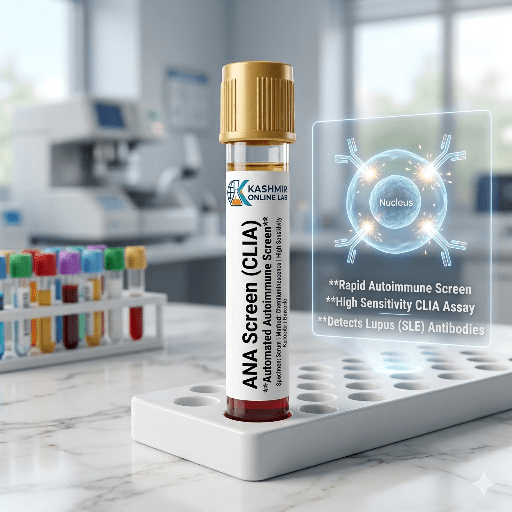
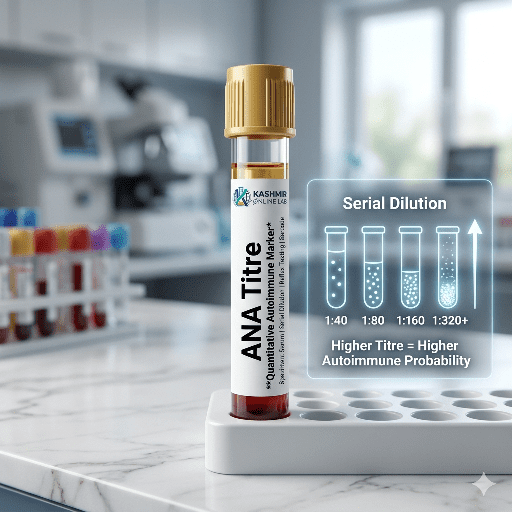
When an initial Antinuclear Antibody (ANA) screen comes back positive, it simply means that autoantibodies targeting cell nuclei are present. However, to understand the clinical significance of that positive result, a doctor needs to know how much antibody is present. This is determined by the ANA Titre. The laboratory takes the patient’s blood serum and repeatedly dilutes it with saline (e.g., 1 part serum to 40 parts saline, then 1:80, 1:160, 1:320, and so on). The highest dilution at which the fluorescent antibodies can still be seen under a microscope is the patient’s “titre.”
Clinical Significance:
- Determining Disease Likelihood: A low titre (such as 1:40 or 1:80) is often considered a “weak positive” and can sometimes be found in perfectly healthy individuals, particularly older adults, or those with minor viral infections.
- Diagnosing Autoimmune Conditions: A high titre (such as 1:320, 1:640, or greater) is a “strong positive” and is highly suggestive of a systemic autoimmune connective tissue disease, such as Systemic Lupus Erythematosus (SLE), Scleroderma, or Mixed Connective Tissue Disease (MCTD).
- Context is Key: The ANA Titre is always interpreted alongside the ANA “Pattern” (e.g., speckled, homogenous) and the patient’s physical symptoms. It serves as a critical bridge between a basic screening and a definitive diagnosis.
When is this test recommended?
Healthcare providers typically order the ANA Titre:
- As a Reflex Test: Most modern laboratories automatically perform a titre if the initial ANA By IFA screening test returns a positive result.
- Clarifying Symptoms: When a patient has strong symptoms of an autoimmune disorder, the exact titre level helps the rheumatologist confirm the severity of the immune system’s overactivity.
- Monitoring: Occasionally used to monitor disease activity over time, though specific antibody panels (like anti-dsDNA for Lupus) are generally preferred for ongoing tracking.
Sample Requirements:
- Specimen: Blood (Serum).
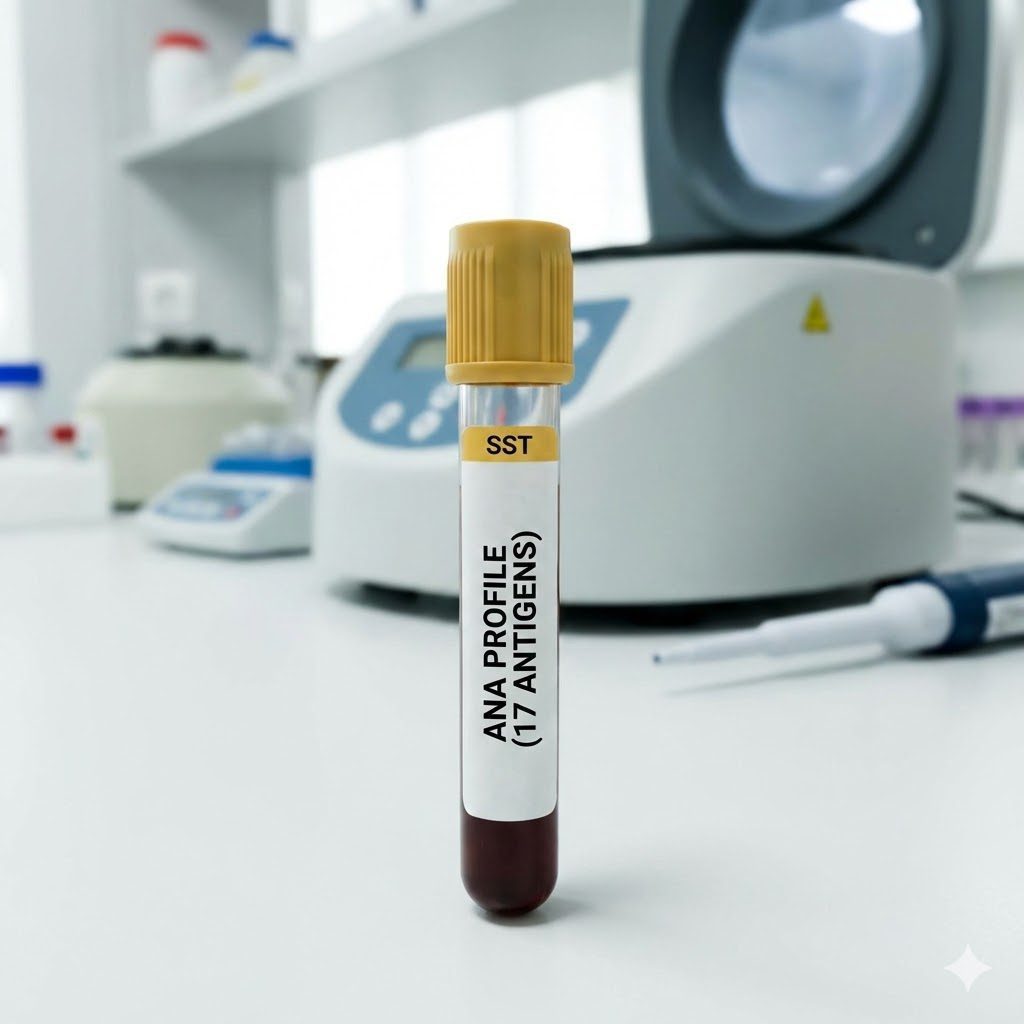
- Container: A standard Gold-top Serum Separator Tube (SST) or a Red-top tube.
Patient Preparation:
- No Fasting Required: Patients can eat and drink normally prior to the test.
- Medication Review: Certain medications (like blood pressure drugs or anti-seizure medications) can cause a drug-induced positive ANA. Patients should ensure their doctor is aware of all active prescriptions.