Description
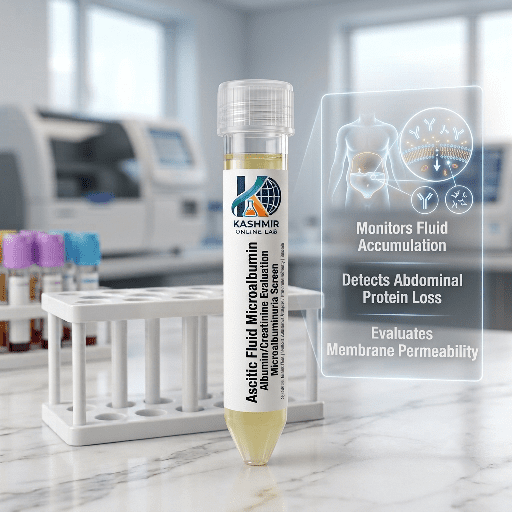
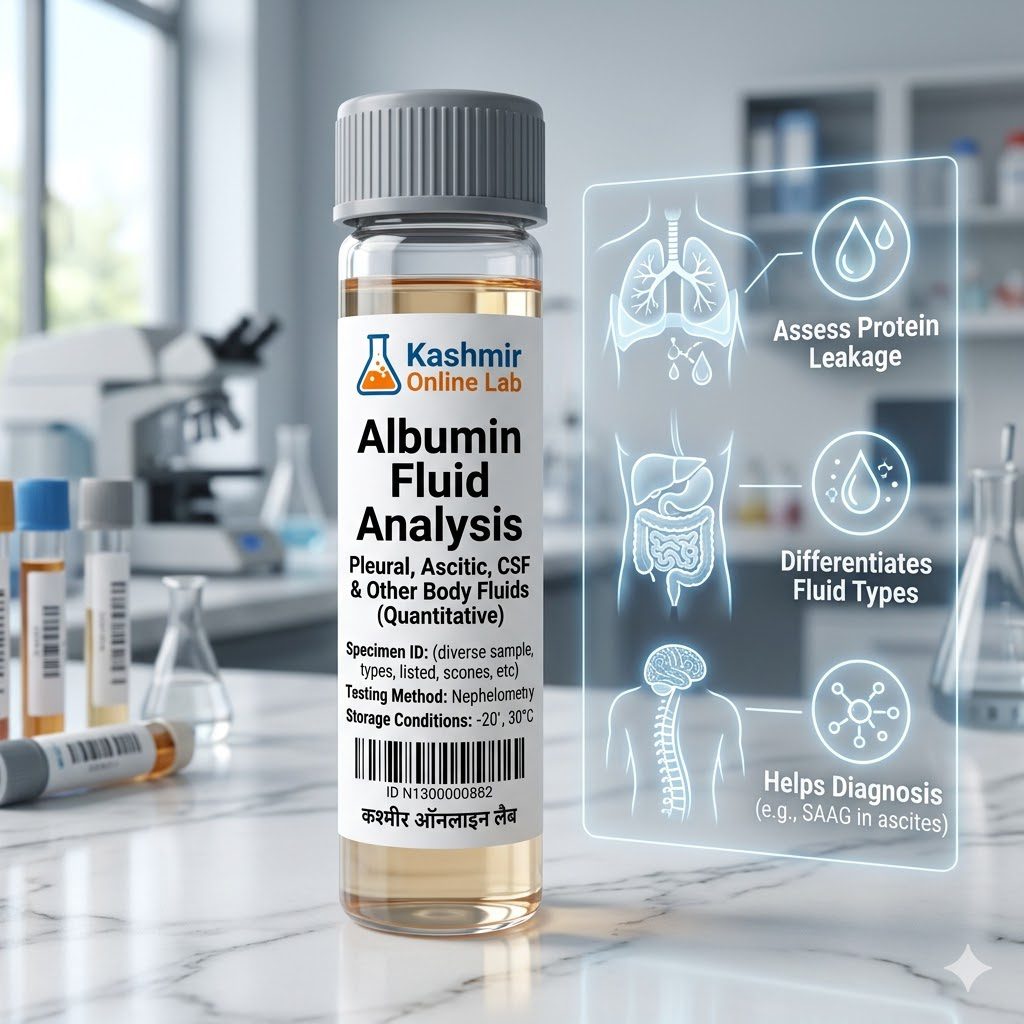
The Albumin Fluid Analysis test measures the concentration of the essential protein, albumin, in various body fluids other than blood, such as pleural, ascitic, or cerebrospinal fluid. Crucially, when interpreted alongside serum (blood) albumin levels (often via gradients like SAAG), this test is vital for differentiating between systemic and local causes of fluid buildup, assessing protein leakage, and investigating serious underlying health conditions.
Albumin is the body’s most abundant protein, made by the liver and crucial for fluid balance and transport. While usually measured in blood plasma (image_159.png), measuring albumin in other body fluids is a key diagnostic tool for specific, localized conditions. This test assesses the precise concentration of albumin in samples of fluid collected from distinct body compartments, including pleural fluid (around the lungs), ascitic fluid (from the abdomen), cerebrospinal fluid (CSF, from around the brain and spinal cord), and potentially others.
Clinical Significance & Applications: The primary value of the Albumin Fluid Analysis test lies in the calculation of specific gradients or ratios when compared to the patient’s concurrent Serum Albumin level. This helps doctors accurately classify the cause of fluid buildup:
Pleural Fluid (Chest Cavity):
Serum-Effusion Albumin Gradient: Calculated as Serum Albumin minus Pleural Albumin.
A gradient > 1.2 g/dL typically indicates a transudate (systemic factors like congestive heart failure or liver cirrhosis, where albumin is normal but fluid balance is disrupted).
A gradient ≤ 1.2 g/dL indicates an exudate (local factors like infection, inflammation, pneumonia, tuberculosis, or malignancy, where the barrier is damaged, allowing more protein to leak).
Ascitic Fluid (Abdominal Cavity):
SAAG (Serum-Ascites Albumin Gradient): Calculated as Serum Albumin minus Ascitic Albumin. This is the standard, most reliable test to differentiate causes of ascites (fluid in the abdomen).
SAAG ≥ 1.1 g/dL: Suggests portal hypertension-related ascites, most commonly due to liver cirrhosis, but also possible in conditions like heart failure.
SAAG < 1.1 g/dL: Suggests non-portal hypertension causes, including peritoneal malignancy, tuberculosis, pancreatitis, or nephrotic syndrome.
Cerebrospinal Fluid (CSF):
Measuring CSF Albumin, often interpreted with the CSF/Serum Albumin Ratio, is a critical marker for assessing the integrity of the blood-brain barrier (BBB). Elevated levels suggest barrier compromise from infections (e.g., meningitis), inflammation, trauma, stroke, or tumors.
When is this test recommended? Healthcare providers order fluid albumin analysis, almost always alongside a concurrent blood draw for serum albumin, when a patient presents with symptoms such as:
Unexplained, persistent fluid buildup in the chest (pleural effusion) or abdomen (ascites).
Investigation of potential lung, liver, heart, or kidney disease causing fluid retention.
Suspected neurological infection, inflammation, or biological barrier disruption.
Sample Requirements:
Specimen: Body fluid sample collected via specific medical procedures performed in a clinical setting (thoracentesis, paracentesis, lumbar puncture).
Container: A sterile transport tube or specific fluid collection vial, clearly labeled with the fluid source (as implied by the distinct grey cap in the example image). Handling often requires specific processing instructions.
Patient Preparation:
Patients must follow their doctor’s instructions for the specific collection procedure, which requires a medical setting and supervision. The test itself has no additional special preparations beyond the procedure. Concurrent serum collection is necessary.