Description
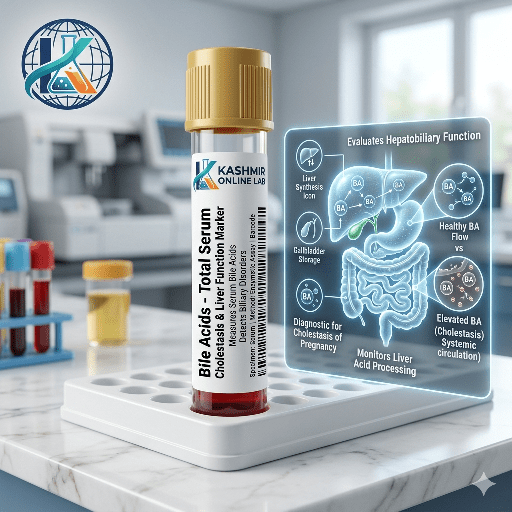
The Bile Acids – Total Serum test is a sensitive and specific indicator of liver health. This test measures the total amount of bile acids circulating in the blood, primarily used to detect and monitor liver and biliary tract disorders. Elevated levels often signal conditions like cholestasis (where bile flow from the liver stops or slows), making it an essential biomarker for evaluating liver function, biliary obstruction, and certain severe liver conditions, including Intrahepatic Cholestasis of Pregnancy (ICP).
Overview:
Bile acids are essential metabolic molecules synthesized in the liver from cholesterol. They are stored in the gallbladder and secreted into the small intestine after meals to aid in the digestion and absorption of dietary fats and fat-soluble vitamins (A, D, E, K). Nearly all bile acids are efficiently reabsorbed by the intestine and returned to the liver via the portal circulation (enterohepatic circulation).
A healthy liver efficiently removes bile acids from the blood coming from the intestine. Consequently, normal fasting serum bile acid levels are very low. The Bile Acids – Total Serum test measures the concentration of all types of bile acids in the blood. If the liver is damaged, or if there is any form of biliary obstruction or cholestasis, the liver cannot efficiently extract bile acids, leading to significantly elevated levels in the bloodstream. This test provides a functional assessment of liver extraction and processing capabilities that standard liver enzymes (like ALT/AST) may not capture.
Clinical Significance:
- Diagnoses Cholestasis: Serum total bile acids are a cornerstone biomarker for diagnosing cholestasis. Elevated levels strongly suggest biliary obstruction or impaired bile acid transport within the liver.
- Identifies Intrahepatic Cholestasis of Pregnancy (ICP): A critical application of this test is in the diagnosis and monitoring of ICP, a reversible liver condition in the third trimester that can pose serious risks to the fetus. Elevated levels are required for diagnosis.
- Detects Biliary Tract Dysfunction: Elevated bile acids are highly specific indicators of issues within the biliary system, including gallstones, tumors, or autoimmune conditions (e.g., Primary Biliary Cholangitis).
- Monitors Chronic Liver Disease: Helps hepatologists assess the severity and monitor the progression of various chronic liver conditions, including hepatitis and cirrhosis.
- Evaluates Post-Prandial Response: In some specialized protocols, both fasting and post-prandial (after eating) samples are collected to provide a more detailed evaluation of bile acid dynamics. (Kashmir Online Lab primarily collects a fasting sample unless otherwise specified).
When is this test recommended?
Healthcare providers typically order the Bile Acids – Total Serum test for patients who:
- Have symptoms of possible liver or biliary dysfunction, such as persistent itching (pruritus), jaundice (yellowing of eyes/skin), dark urine, or pale stools.
- Are pregnant and experiencing intense, unexplained itching, particularly on the palms and soles.
- Have already received borderline results on a routine liver panel and require more sensitive confirmatory testing.
- Are being treated for a chronic liver or biliary condition to monitor therapeutic efficacy.
Sample Requirements:
- Specimen: Blood (Serum).
- Container: A standard Gold-top Serum Separator Tube (SST).
Patient Preparation:
- Fasting: For this test, the patient must fast for a minimum of 8 hours, and typically 12 hours is preferred, prior to the blood draw. Patients can only drink water during the fasting period. Failure to fast can cause significantly elevated levels that do not reflect liver dysfunction.
- General: Advise the patient to inform their physician of all current medications, as some drugs can affect bile acid synthesis or transport.