Description
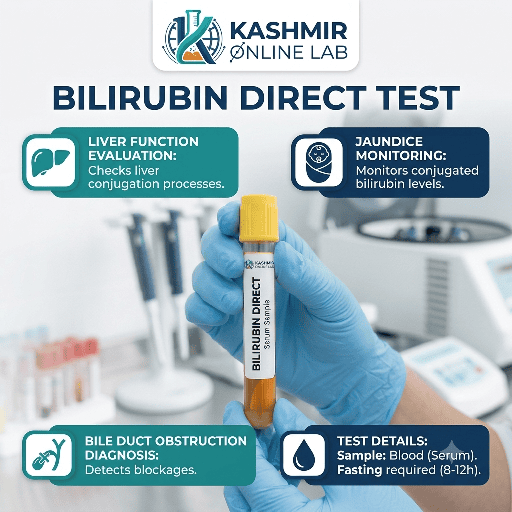
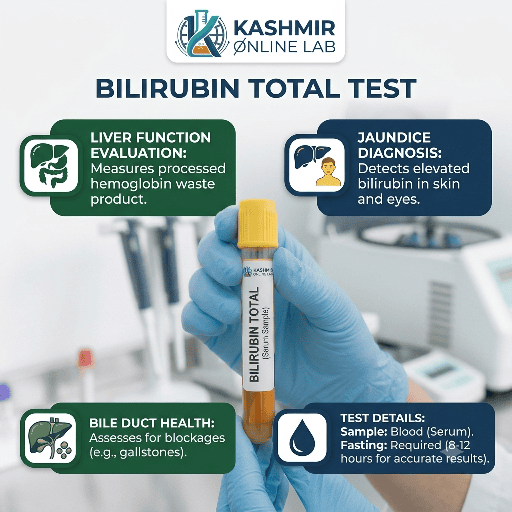
The Bilirubin Total Test is a standard diagnostic blood test that measures the overall levels of bilirubin (a yellowish pigment produced during the normal breakdown of red blood cells) in your bloodstream. This test is essential for evaluating liver health, diagnosing jaundice, and detecting conditions like bile duct obstructions, liver disease, and hemolytic anemia. Fast, accurate, and reliable reports delivered directly to you.
What is the Bilirubin Total Test?
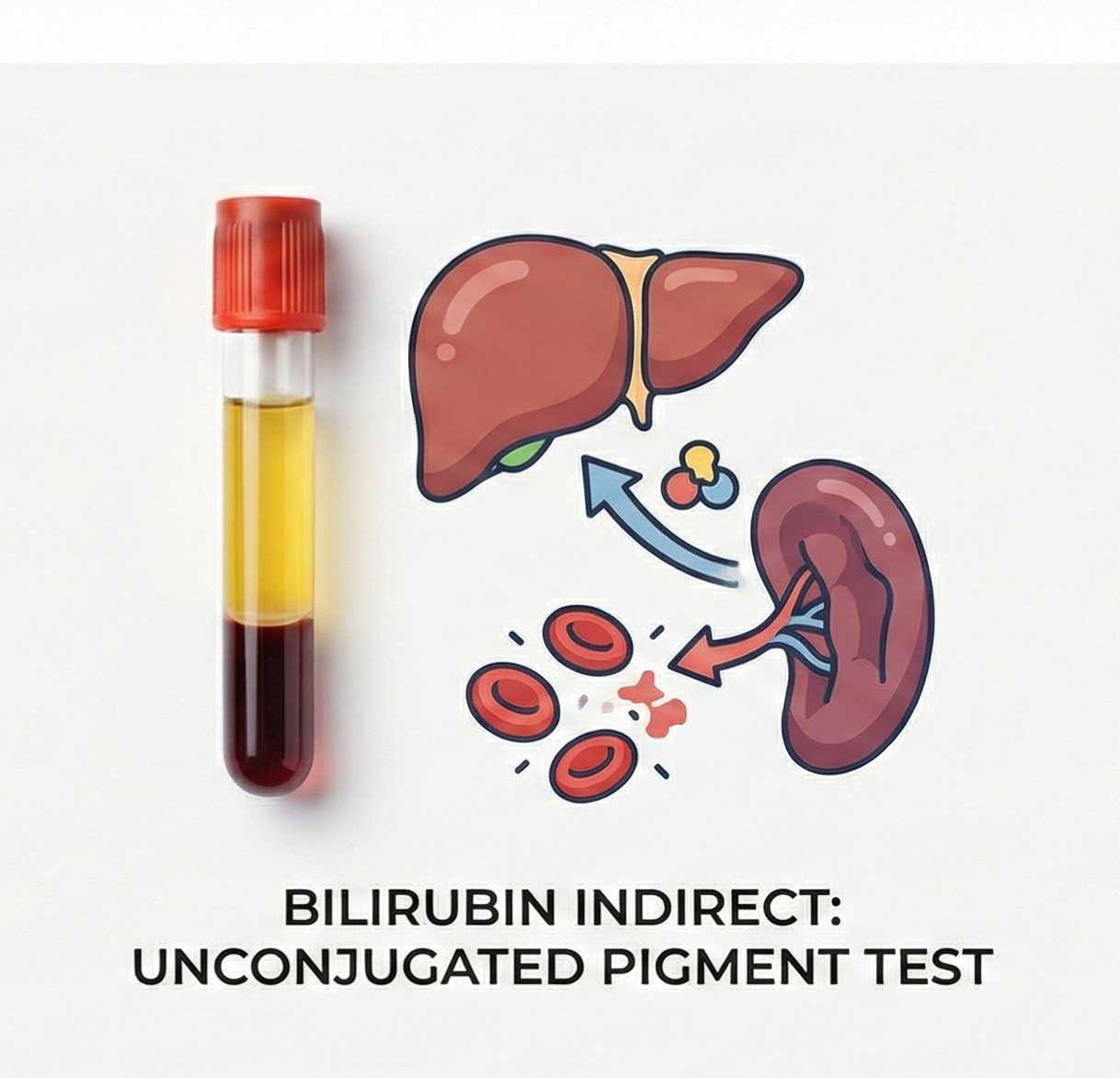
Bilirubin is a waste product created when the body clears out old, damaged red blood cells. The liver typically filters bilirubin from the blood, modifies it, and excretes it into the digestive tract through bile. The Bilirubin Total Test measures the combined amount of two forms of bilirubin in the blood:
- Unconjugated (Indirect) Bilirubin: The immediate byproduct of red blood cell breakdown before it reaches the liver.
- Conjugated (Direct) Bilirubin: The modified form of bilirubin processed by the liver, ready for excretion.
Elevated total bilirubin levels often indicate that the liver is either overwhelmed by rapid red blood cell destruction, struggling to process bilirubin due to liver damage, or unable to excrete it because of a blockage.
Why is This Test Ordered?
Your physician may recommend a Bilirubin Total test as part of a routine comprehensive metabolic panel (CMP) or liver function test (LFT), or if you are experiencing specific symptoms such as:
- Jaundice: Yellowing of the skin and the whites of the eyes (common in both adults and newborns).
- Liver Disease Symptoms: Dark-colored urine, pale or clay-colored stools, nausea, vomiting, or abdominal pain/swelling.
- Bile Duct Blockages: Investigating potential gallstones, strictures, or tumors preventing normal bile flow.
- Hemolytic Anemia: Evaluating conditions where red blood cells are destroyed faster than they can be produced.
- History of Alcohol Abuse or Hepatitis: Monitoring ongoing liver stress or disease progression.