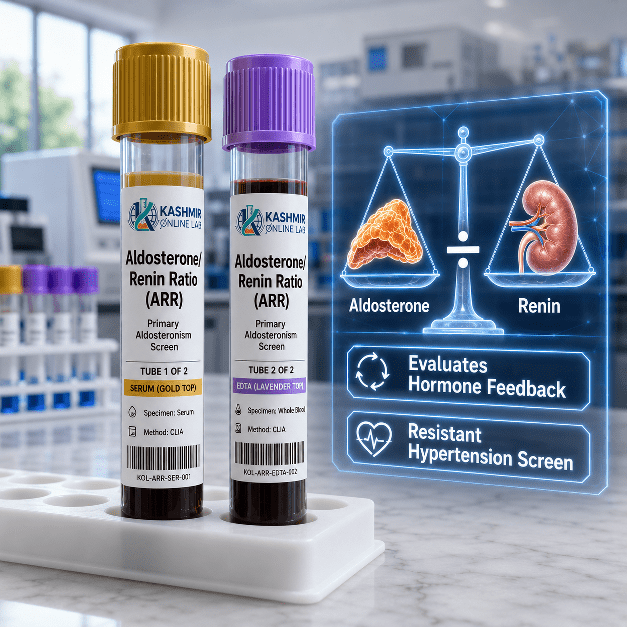
Description
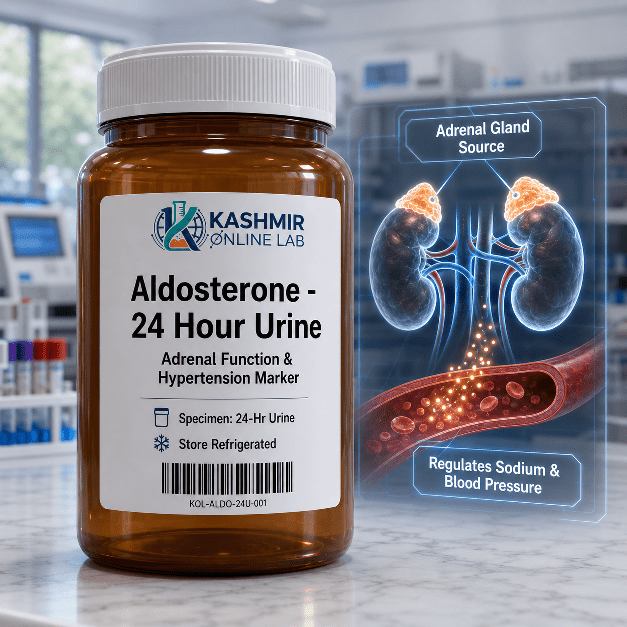
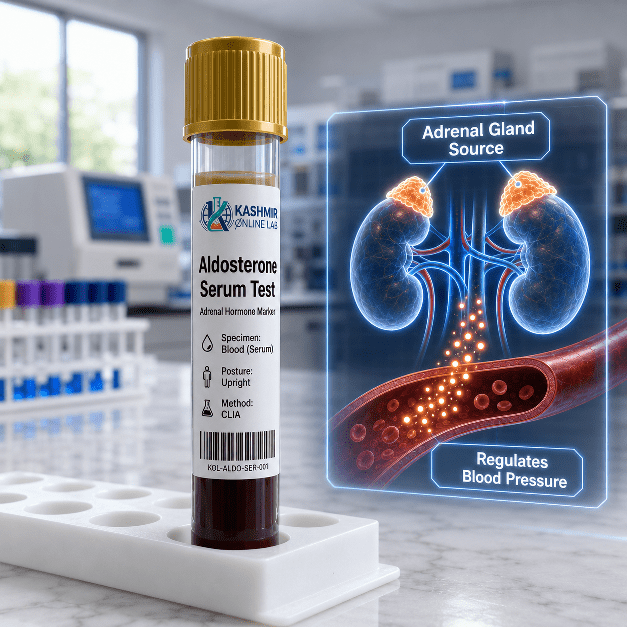
Blood pressure is normally regulated by a feedback loop between the kidneys and the adrenal glands, known as the renin-angiotensin-aldosterone system (RAAS). When blood pressure drops, the kidneys release the enzyme Renin, which stimulates the adrenal glands to produce Aldosterone. Aldosterone then causes the body to retain sodium and water, raising blood pressure.
In a healthy system, high blood pressure suppresses renin, which in turn lowers aldosterone. However, in Primary Aldosteronism (Conn’s Syndrome), the adrenal glands produce excess aldosterone autonomously. Measuring the ratio of these two substances—revealing high aldosterone paired with severely suppressed renin—provides a highly accurate diagnostic indicator.
Clinical Significance:
- Gold Standard Screening: The ARR is the internationally recommended first-line screening test for Primary Aldosteronism.
- Identifying Treatable Hypertension: Primary aldosteronism is a specific, often curable cause of high blood pressure. Identifying it can lead to targeted treatments (like surgery or specific medications) rather than standard, broadly acting blood pressure drugs.
- Evaluating Hypokalemia: Helps investigate why a patient with high blood pressure also suffers from unexplained low blood potassium.
When is this test recommended?
Healthcare providers typically order the ARR panel when a patient presents with:
- Resistant Hypertension: High blood pressure that remains uncontrolled despite taking three or more different blood pressure medications.
- High blood pressure combined with low potassium (spontaneous or diuretic-induced).
- Early-onset high blood pressure (e.g., before age 40).
- A family history of early-onset hypertension or stroke.
- The discovery of an adrenal mass (incidentaloma).
Sample Requirements:
- Specimen: Blood. Because this is a ratio, it typically involves drawing two samples simultaneously to measure both components accurately.
- Containers:
- A Gold-top (SST) or Red-top tube for Serum Aldosterone.
- A Lavender-top (EDTA) tube for Plasma Renin Activity (PRA) or Direct Renin. Note: The renin sample requires immediate chilling and rapid freezing by the laboratory.
Patient Preparation (Highly Critical):
- Medication Washout: Many common drugs—especially beta-blockers, ACE inhibitors, ARBs, and diuretics (like spironolactone)—can cause false-positive or false-negative ratios. Your doctor will likely require a carefully monitored transition to “permissive” medications for 2 to 6 weeks before the test.
- Posture: Blood must be drawn mid-morning (typically between 8:00 AM and 10:00 AM) after the patient has been out of bed and in a seated, upright position for at least two hours.
- Potassium & Salt: Potassium levels must be normalized before testing, and patients are usually advised not to restrict their dietary salt intake in the days leading up to the draw.