Description
Arginine Vasopressin (AVP) / ADH Assay
The Arginine Vasopressin (AVP) / ADH Assay measures the level of the crucial anti-diuretic hormone, also known as vasopressin, in your blood. This specialized test helps diagnose and monitor complex conditions related to water balance and electrolyte regulation, such as diabetes insipidus and SIADH (Syndrome of Inappropriate Antidiuretic Hormone secretion).
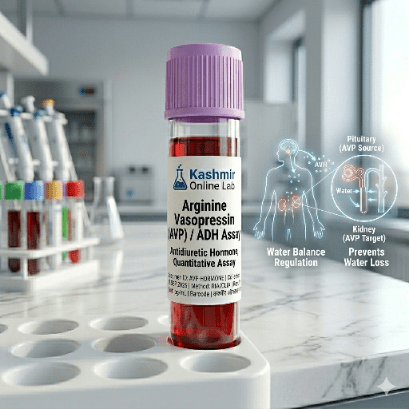
Antidiuretic Hormone (ADH), or Arginine Vasopressin (AVP), is a vital hormone produced in the hypothalamus and stored/released by the posterior pituitary gland. Its primary role is to act on the kidneys to regulate the body’s water retention. By controlling the amount of water excreted in urine, AVP maintains the body’s overall fluid volume, blood pressure, and plasma osmolality. This dynamic assay measures the precise concentration of AVP in plasma, providing critical insight into endocrine function and water homeostasis.
Clinical Significance:
- Gold Standard Diagnosis: AVP testing is essential for distinguishing between different types of diabetes insipidus (Central vs. Nephrogenic vs. Dipsogenic).
- Investigating Hyponatremia: The test is a key component in the workup of unexplained low sodium (hyponatremia), helping identify disorders like SIADH where excess AVP causes water retention.
- Monitoring Neuroendocrine Status: It can be used to assess the function of the hypothalamic-pituitary axis in patients with brain tumors or head injuries.
When is this test recommended?
Healthcare providers typically order an AVP/ADH Assay, often as part of a dynamic water balance panel (including osmolality and electrolytes), when a patient presents with symptoms such as:
- Excessive and unquenchable thirst (polydipsia).
- Production of very large volumes of dilute urine (polyuria).
- Chronic low blood sodium levels (hyponatremia).
- Suspicion of SIADH or Diabetes Insipidus.
Sample Requirements:
- Specimen: Blood (Plasma).
- Container: A Lavender-top EDTA tube is required and is critical for sample stability. Note: Rapid handling, prompt separation, stabilization, and FREEZING are essential for accurate enzyme assay.
Patient Preparation:
- Dynamic Testing (Strict): Patient preparation is complex. Tests often involve a water deprivation test, a water loading test, or hypertonic saline infusion performed strictly under close medical supervision to evaluate the body’s response. Patients must strictly follow instructions regarding fluid intake and fasting prior to the test.