Description
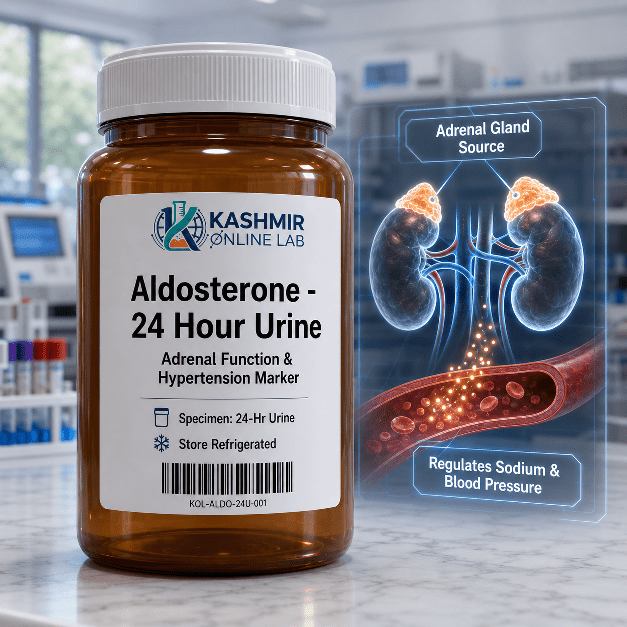
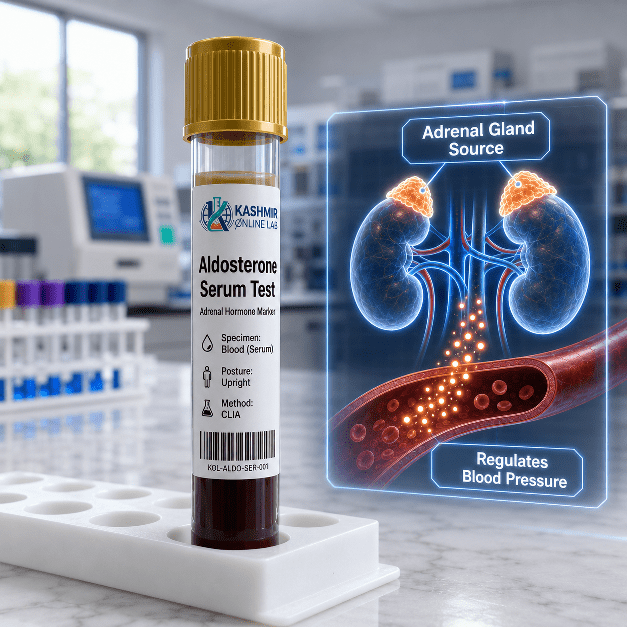
Aldosterone is a primary mineralocorticoid hormone secreted by the outer layer of the adrenal glands (the adrenal cortex), which sit atop the kidneys. Its main function is to signal the kidneys to retain sodium and excrete potassium. This process increases water retention, thereby expanding blood volume and raising blood pressure. Measuring aldosterone in the blood (serum) provides a snapshot of the body’s immediate hormone production and fluid balance.
Clinical Significance:
- Primary Aldosteronism (Conn’s Syndrome): This test is essential for identifying conditions where the adrenal glands overproduce aldosterone autonomously, leading to high blood pressure and low potassium levels.
- Secondary Aldosteronism: High levels can also be a secondary response to decreased blood flow to the kidneys, heart failure, or liver cirrhosis.
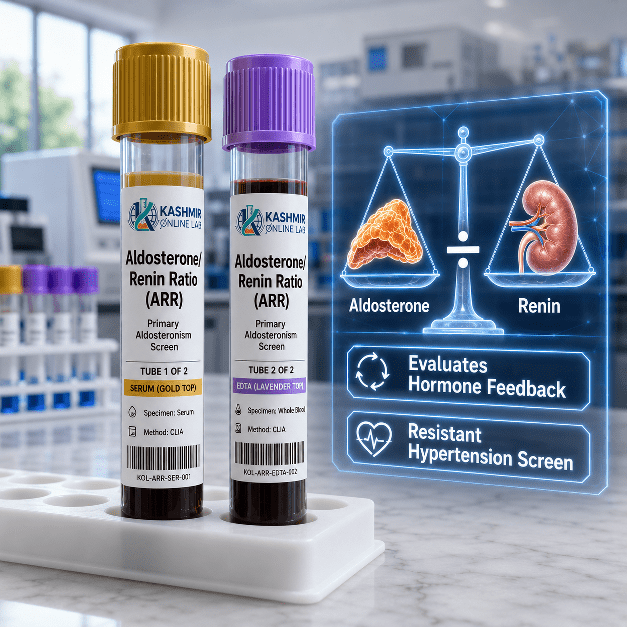
- Aldosterone-to-Renin Ratio (ARR): The aldosterone serum test is most frequently ordered alongside a blood test for Renin. Calculating the ratio between these two (ARR) is the gold standard screening tool for primary aldosteronism.
- Adrenal Insufficiency: Abnormally low levels may indicate primary adrenal insufficiency (Addison’s disease), where the adrenal glands fail to produce adequate hormones.
When is this test recommended?
Healthcare providers typically order this test when a patient presents with:
- High blood pressure that requires multiple medications to control (resistant hypertension).
- High blood pressure accompanied by unexplained low blood potassium (hypokalemia).
- High blood pressure at a young age.
- Incidental discovery of an adrenal mass (incidentaloma) on an imaging scan.
Sample Requirements:
- Specimen: Blood (Serum).
- Container: A Gold-top Serum Separator Tube (SST) or a standard Red-top tube.
Patient Preparation (Crucial for Accuracy):
- Posture: Aldosterone levels change significantly based on posture. Your doctor will specify whether the blood should be drawn while you are upright (seated or standing for at least 2 hours) or supine (lying down flat).
- Time of Day: Blood is typically drawn in the morning (e.g., around 8:00 AM) when levels are usually at their peak.
- Diet and Medication: You may be asked to consume a normal sodium diet prior to the test. Many medications—especially blood pressure drugs, diuretics, and oral contraceptives—can severely alter results. A physician must provide strict guidance on which medications to suspend before testing.