Description
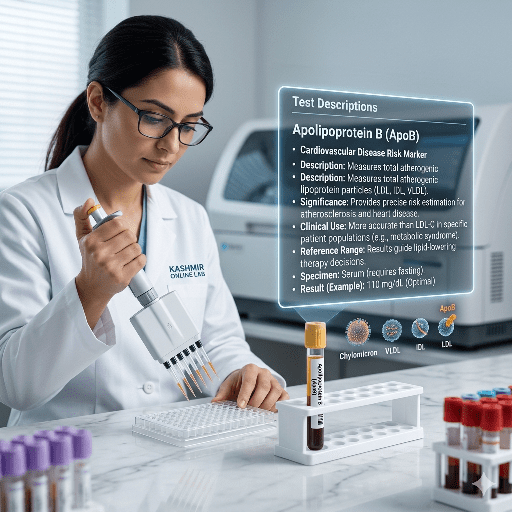
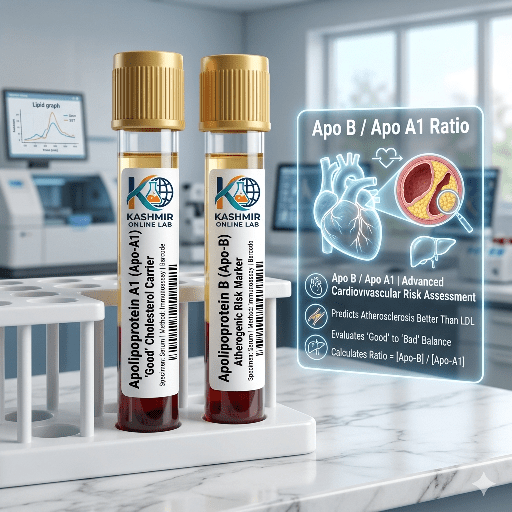
This specialized panel measures Apolipoprotein A1 (Apo-A1) and Apolipoprotein B (Apo-B), crucial proteins that transport cholesterol through the blood. Apo-A1 is the main component of ‘good’ HDL, while Apo-B is the primary carrier for ‘bad’ LDL and other atherogenic particles. Together with the Apo B/Apo A1 Ratio, this test provides an advanced, precise evaluation of your cardiovascular risk, far more predictive than a standard cholesterol panel.
Overview:
Standard lipid panels measure the total amount of cholesterol carried in high-density lipoprotein (HDL) and low-density lipoprotein (LDL). This advanced panel goes deeper by measuring the specific carrier proteins themselves, offering a clearer picture of lipid particle quality and number.
- Apolipoprotein A1 (Apo-A1): This protein makes up 70% of high-density lipoprotein (HDL). HDL, known as ‘good’ cholesterol, picks up excess cholesterol from the bloodstream and transports it back to the liver for disposal (reverse cholesterol transport). Apo-A1 levels are a direct measure of the amount and functionality of HDL particles in circulation. Higher levels are desirable and associated with reduced cardiovascular risk.
- Apolipoprotein B (Apo-B): This is the essential structural protein for all atherogenic (plaque-forming) lipoproteins, including LDL (bad cholesterol), very-low-density lipoprotein (VLDL), and intermediate-density lipoprotein (IDL). Since each atherogenic particle contains exactly one molecule of Apo-B, the Apo-B concentration is a direct and precise measure of the total number of atherogenic particles in circulation. Elevated levels are strongly associated with plaque buildup and an increased risk of heart disease.
- Apo B/Apo A1 Ratio: This calculation compares the number of ‘bad’ plaque-forming particles (Apo-B) to the number of ‘good’ plaque-clearing particles (Apo-A1). This ratio is widely considered by cardiologists to be one of the strongest predictive markers for cardiovascular disease risk, superior to the Total/HDL or LDL/HDL ratios derived from a standard lipid panel. A higher ratio indicates a greater imbalance favoring plaque formation.
Clinical Significance:
- Predicting Cardiovascular Events: The Apo B/A1 ratio is an incredibly sensitive predictor of first-time heart attacks and strokes, even in individuals with “normal” LDL levels, helping identify “hidden” risk.
- Differentiating Particle Size: A standard LDL-C test measures weight, but not particle number. A high Apo-B level often indicates many small, dense LDL particles, which are the most dangerous type because they can easily penetrate artery walls and cause plaque.
- Monitoring Therapy: This panel is invaluable for tracking the effectiveness of lipid-lowering treatments, such as statins or PCSK9 inhibitors, as it confirms reductions in actual particle count rather than just weight.
When is this test recommended?
Healthcare providers typically order the Apolipoprotein A1 & B panel with the Ratio when:
- A standard lipid panel shows borderline high LDL or low HDL, making overall risk unclear.
- A patient has a strong family history of early heart disease, even with normal routine cholesterol levels.
- A physician wants an advanced risk assessment to guide the decision to start or adjust preventive cardiovascular medication.
- Monitoring patients on cholesterol-lowering therapy to ensure target particle reduction has been achieved.
- In individuals with Type 2 diabetes or metabolic syndrome, where standard panels often underestimate cardiovascular risk.
Sample Requirements:
- Specimen: Blood (Serum).
- Container: A standard Gold-top Serum Separator Tube (SST).
Patient Preparation:
- General: Fasting for 9-12 hours prior to the blood draw is typically recommended, but it should be confirmed with the ordering physician as non-fasting measurements can be appropriate depending on clinical context. Patients should inform their doctor of all active medications, especially any supplements or drugs used to manage lipids or hormones. Biotin (vitamin B7) supplements should be avoided for 72 hours prior to the test as high doses can interfere with immunoassays.