Description
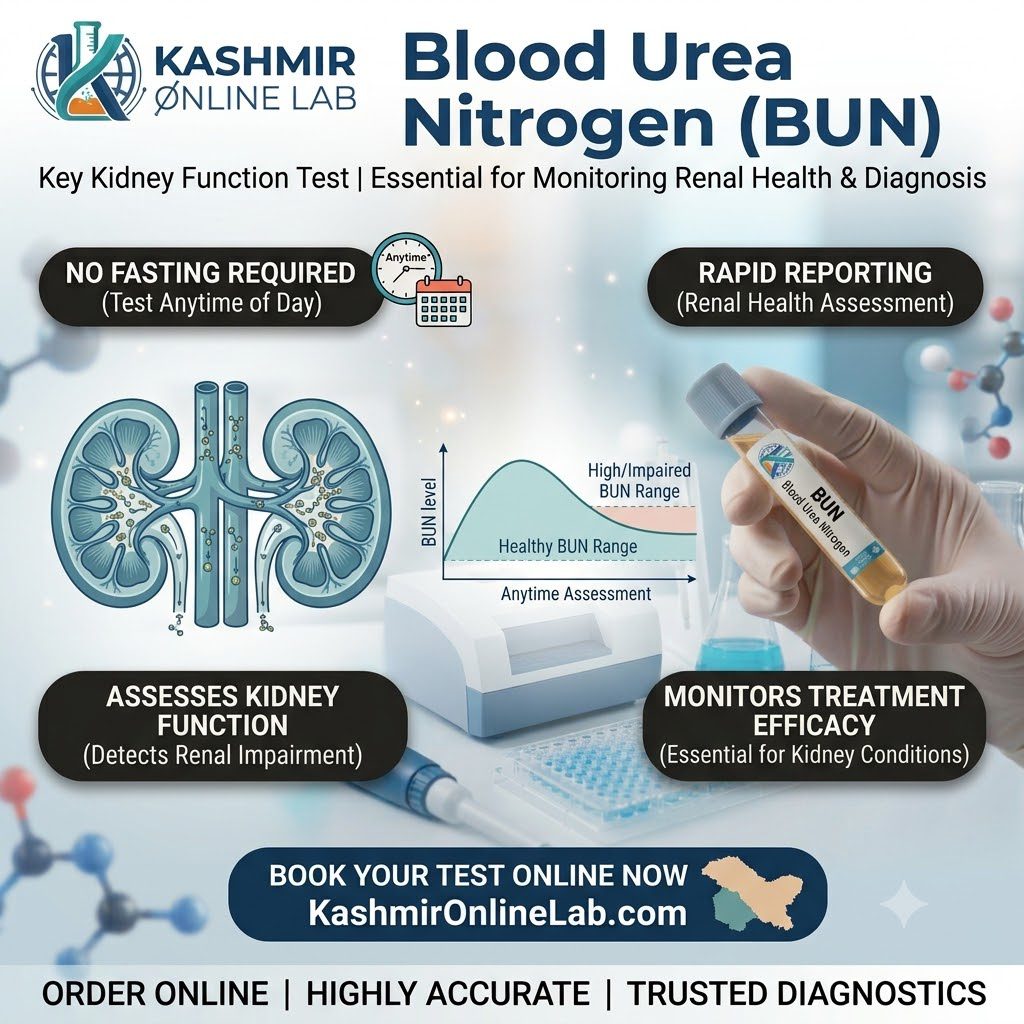
The Blood Urea Nitrogen (BUN) Test is a rapid, high-precision blood screening that evaluates how well your kidneys are filtering waste from your bloodstream. Essential for detecting early renal impairment, monitoring chronic kidney conditions, and assessing hydration levels, this test delivers accurate, dependable results to help you and your physician make informed healthcare decisions.
What is the Blood Urea Nitrogen (BUN) Test?
Urea nitrogen is a normal waste product created when your liver breaks down proteins from the food you eat. Once generated, this waste travels through your bloodstream to your kidneys, where healthy filtering units (nephrons) remove it from the blood and flush it out of the body through urine.
When kidney function is compromised or impaired, the organs are unable to efficiently filter and clear this waste, causing urea nitrogen levels to build up in the blood. A Blood Urea Nitrogen (BUN) test measures the precise concentration of this nitrogen waste in your serum, serving as a critical indicator of overall renal health and liver function.
When Should This Test Be Ordered?
Your doctor or nephrologist may recommend a BUN test as part of a routine comprehensive metabolic panel (CMP) or to investigate specific symptoms and health factors, including:
Routine Health Screening: Annual evaluation of kidney and liver performance.
Monitoring Chronic Kidney Disease (CKD): Tracking disease progression and the effectiveness of renal treatments or dialysis.
Symptoms of Renal Impairment: Unexplained fatigue, persistent swelling in the legs, feet, or puffiness around the eyes (edema), changes in urination frequency or color, and lower back (flank) pain.
Assessing Hydration Status: Evaluating severe dehydration or fluid overload.
Medication Safety Monitoring: Checking kidney tolerance when starting medications known to affect renal clearance (nephrotoxic drugs).
Test Specifications & Patient Guidelines
| Parameter | Specification |
| Sample Type | Blood (Serum / Plasma) – 3 mL in Serum Separator Tube (SST) or Red Top |
| Preparation / Fasting | No fasting required. Can be performed at any time of the day unless ordered alongside fasting glucose or lipid panels. Stay normally hydrated. |
| Methodology | Urease / UV-Kinetic Enzymatic Assay |
| Recommended For | General renal screening, kidney disease monitoring, and hydration assessment |
| Report Turnaround Time | Same Day / Within 24 Hours (Rapid clinical processing) |
| Home Sample Collection | Available across Srinagar and surrounding districts via Kashmir Online Lab |
Part 2: Interpretive Reference Ranges & Clinical Insights
Include this reference table and guide on the product page to help patients and referring physicians understand the clinical context of their results.
| Patient Category | Normal BUN Reference Range (mg/dL) |
| Adults (18–60 Years) | 6.0 – 20.0 mg/dL |
| Adults (60+ Years) | 8.0 – 23.0 mg/dL (Slightly higher due to normal aging) |
| Children (1–17 Years) | 5.0 – 18.0 mg/dL |
| Infants (< 1 Year) | 4.0 – 15.0 mg/dL |
How to Understand Your BUN Results
What Could Elevated BUN Levels Indicate?
Renal Impairment: Acute kidney injury (AKI) or chronic kidney disease where filtering efficiency is reduced.
Dehydration: Lack of adequate fluid intake causes blood concentration to rise, temporarily elevating BUN levels.
High-Protein Diet or Supplementation: Consuming excessive dietary protein can increase nitrogen waste production.
Gastrointestinal Bleeding: The digestion of blood proteins from internal bleeding can cause a rapid, marked rise in BUN.
Poor Blood Flow to Kidneys: Conditions such as congestive heart failure or shock that reduce renal perfusion.
What Could Low BUN Levels Indicate?
Severe Liver Disease: Since urea is produced in the liver, significant hepatic impairment can reduce BUN synthesis.
Malnutrition or Low-Protein Diet: Insufficient intake of dietary protein.
Overhydration: Excessive fluid intake can dilute blood concentrations.
Normal Pregnancy: Increased blood volume during