Description
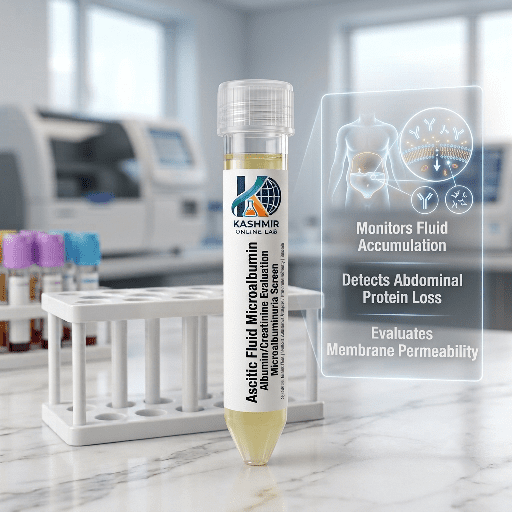
The Ascitic Fluid Microalbumin test is a specialized assay used to detect and measure very low levels of albumin protein within ascitic fluid (fluid accumulated in the abdominal cavity). This test is a crucial indicator for evaluating peritoneal membrane permeability, monitoring chronic inflammation, and assessing complications in patients with advanced liver disease, malignancy, or renal issues.
Overview:
Ascites is the abnormal accumulation of fluid within the peritoneal cavity. A comprehensive analysis of this fluid is essential to determine its cause (etiology) and guide treatment. While standard total protein and albumin levels are part of routine fluid analysis (used to calculate the Serum-Ascites Albumin Gradient or SAAG), the Ascitic Fluid Microalbumin test provides a far more sensitive measurement of protein concentration.
This assay is designed to detect minute amounts of albumin that would be missed by standard automated protein tests. The presence of even small quantities of microalbumin can signal altered permeability of the peritoneal membrane or significant local protein loss.
Clinical Significance:
- Evaluates Membrane Permeability: Increased microalbumin in ascitic fluid suggests heightened permeability of the peritoneal mesothelium. This can be caused by localized inflammation, infection, or malignancies involving the peritoneum.
- Monitors Fluid Accumulation: Understanding protein dynamics in the fluid helps manage patients with difficult-to-control ascites, especially in conditions like cirrhosis where massive protein shifts occur.
- Detects Abdominal Protein Loss: This test can quantify subtle protein leakage into the abdominal space, aiding in the diagnosis of protein-losing conditions.
- Differentiating Portal Hypertension: Although often used in conjunction with other SAAG metrics, extremely sensitive microalbumin analysis can sometimes help refine risk assessment and diagnosis, particularly when portal hypertension and other complications overlap.
When is this test recommended?
Healthcare providers typically order the Ascitic Fluid Microalbumin test as part of an expanded fluid analysis panel when a patient presents with ascites, particularly for:
- Refractory or difficult-to-treat ascites in patients with liver cirrhosis.
- Suspicion of peritoneal infection (Spontaneous Bacterial Peritonitis) or inflammation where standard markers are ambiguous.
- Investigating ascites associated with potential abdominal malignancies.
- A need to understand subtle permeability shifts not captured by total protein analysis.
Sample Requirements:
- Specimen: Ascitic Fluid (Paracentesis sample).
- Container: A specialized sterile, clear sample collection cup or dedicated well-plate insert for automated analysis (not a blood collection tube).
Patient Preparation:
- General: This test is performed on fluid collected via paracentesis, which is a clinical procedure. The patient does not require special preparation, but the standard protocol for paracentesis should be followed by the medical provider.