Albumin Blood Test
₹120.00
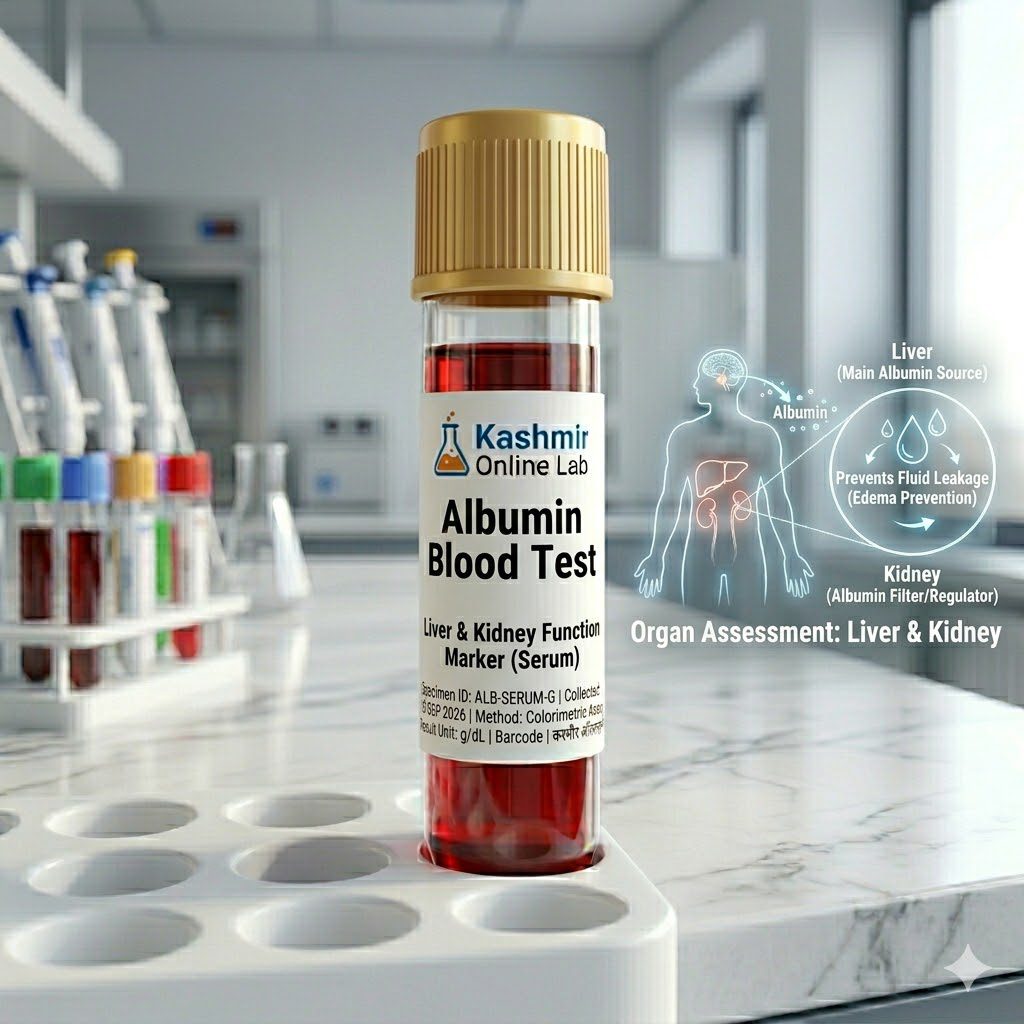
The Albumin Blood Test measures the level of the body’s most abundant protein, made by the liver. It is a critical marker for evaluating liver and kidney function, as well as nutritional status. Abnormal levels help doctors identify conditions such as liver disease, chronic kidney disease, or severe protein deficiency.
Overview: Albumin is the primary protein found in human blood plasma, synthesized almost exclusively by the liver. It accounts for a massive 50-60% of total plasma protein. The Albumin Blood Test is a fundamental diagnostic tool used to measure its concentration. Albumin performs two vital roles: it maintains the osmotic pressure that prevents fluid from leaking out of blood vessels (preventing edema, or swelling), and it acts as a carrier molecule for various substances, including hormones, vitamins, and drugs. Because the liver produces it and the kidneys filter it, albumin levels are a strong indicator of the health of both organs.
Clinical Significance:
Liver Function Assessment: Since the liver is the main producer of albumin, low levels (hypoalbuminemia) are a key sign of significant liver damage or disease, such as cirrhosis or hepatitis, reflecting a decreased synthetic capacity.
Kidney Function Evaluation: Healthy kidneys prevent albumin from passing into the urine. Elevated levels of albumin in the urine (albuminuria) combined with low levels in the blood suggest kidney damage or chronic kidney disease, where the filtering units are compromised.
Nutritional Status Marker: Low albumin levels can be indicative of severe malnutrition or a protein-deficient diet, though it is not a direct measure of recent nutritional intake due to its long half-life.
Investigating Edema: A common cause of low blood albumin is fluid leakage into the tissues, leading to swelling (edema) in the abdomen (ascites) or legs. This test helps identify the cause of unexplained swelling.
When is this test recommended? Healthcare providers order an Albumin test, usually as part of a Comprehensive Metabolic Panel (CMP) or a Liver Function Test (LFT) panel, when a patient presents with symptoms such as:
Unexplained swelling or edema (feet, ankles, face, abdomen).
Signs of liver disease (jaundice, fatigue, light-colored stool, abdominal pain).
Signs of kidney disease (bloody or foamy urine, change in urination, dry/itchy skin).
Suspected malnutrition or during routine health checkups.
Sample Requirements:
Patient Preparation:
Fasting (Complex): A simple Albumin test does not require fasting. However, because it is almost always done alongside other tests (like glucose, part of a CMP) that do require fasting, patients are typically advised to fast (no food or drink, only water) for 8-12 hours prior to the test. Strictly follow your physician’s instructions.