Description
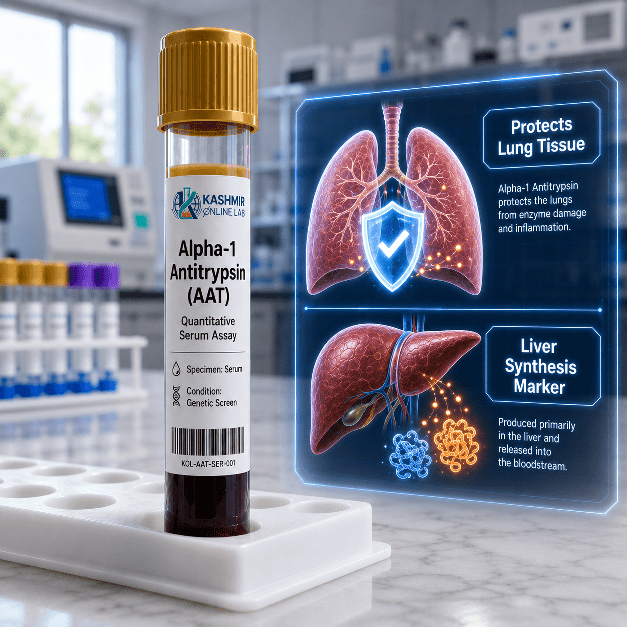
Alpha-1 Antitrypsin (AAT) is an essential protein synthesized primarily in the liver and released into the bloodstream. Its main function is to travel to the lungs and protect delicate lung tissue from an enzyme called neutrophil elastase. Neutrophil elastase is released by white blood cells to fight infection, but without AAT to keep it in check, it will attack and destroy healthy lung tissue. The AAT Quantitation test accurately measures the concentration of this protective protein in the blood.
Clinical Significance:
- Alpha-1 Antitrypsin Deficiency (AATD): This is an inherited genetic condition where the body does not produce enough normal AAT. It causes two major problems:
- Lung Disease: Without enough AAT in the blood, the lungs are left unprotected. This often leads to early-onset emphysema or chronic obstructive pulmonary disease (COPD), even in people who have never smoked.
- Liver Disease: In many cases of AATD, the liver produces a misfolded, abnormal version of the AAT protein. Instead of entering the bloodstream, this defective protein gets trapped in the liver cells, eventually causing liver damage, scarring (cirrhosis), and increasing the risk of liver cancer.
- Acute-Phase Reactant: It is important to note that AAT is also an “acute-phase reactant.” This means AAT levels naturally rise in the body during times of acute inflammation, infection, or tissue injury.
When is this test recommended?
Healthcare providers typically order an AAT Quantitation test when a patient presents with:
- Early-onset emphysema or COPD (typically under the age of 45).
- Emphysema or asthma that does not respond to standard treatments.
- COPD in a patient with no history of smoking or exposure to lung irritants.
- Unexplained chronic liver disease or cirrhosis.
- Persistent jaundice in a newborn or infant.
- A known family history of Alpha-1 Antitrypsin Deficiency.
Sample Requirements:
- Specimen: Blood (Serum).
- Container: A standard Gold-top Serum Separator Tube (SST) or a Red-top tube.
Patient Preparation:
- No Fasting Required: There are no strict fasting requirements for this specific test.
- Timing: Because AAT levels can spike during temporary illnesses or infections (as it is an inflammatory marker), your doctor may wait until you are free from acute illness to get an accurate baseline measurement.