
Description
Overview:
Urine naturally contains a small amount of various proteins. In certain disease states, particularly those involving the bone marrow and immune system, the body produces large, abnormal quantities of a single type of protein, known as a monoclonal protein or “M-protein”. Some of these M-proteins, especially free immunoglobulin light chains (formerly called Bence Jones protein), are very small and efficiently filtered out of the blood by the kidneys, making them detectable in urine even when blood levels are low.
The 24-Hour Urine Electrophoresis test utilizes an electric field to separate the different proteins collected in the 24-hour urine sample based on their size and electrical charge. This creates a graph of distinct “peaks” (as shown in the infographic) representing different protein groups, such as albumin and specific immunoglobulins, which is then analyzed for the presence of abnormal, sharp peaks indicating a monoclonal gammopathy.
Clinical Significance:
Diagnosis of Monoclonal Gammopathies: This test is crucial for diagnosing disorders like Multiple Myeloma, where the bone marrow produces cancerous plasma cells that churn out abnormal light chains. Detection of these light chains is often a primary indicator of light chain disease or AL amyloidosis.
Monitoring Disease Activity: For patients already diagnosed with Multiple Myeloma, this test is used to monitor the effectiveness of treatment, such as chemotherapy or stem cell transplant. A reduction in the quantity of excreted monoclonal protein correlates with a positive response to therapy.
Complementing Blood Tests: While Serum Protein Electrophoresis (SPEP) is often the first step, Urine Protein Electrophoresis (UPEP) is essential because light chain disease might only be detectable in urine, especially when the kidney’s filtering function is still intact.
When is this test recommended?
Healthcare providers usually order this test when a patient exhibits symptoms suggestive of Multiple Myeloma or other protein-related disorders, including:
Unexplained bone pain or fractures.
Severe or chronic fatigue, suggestive of anemia.
Unexplained kidney failure.
High blood calcium levels (hypercalcemia).
Abnormal findings on SPEP (Serum Protein Electrophoresis) that require further investigation in urine.
A family history of Multiple Myeloma or similar disorders.
Collection Process:
A complete 24-hour urine collection is required, which provides an accurate measure of total daily protein output and monoclonal protein quantity.
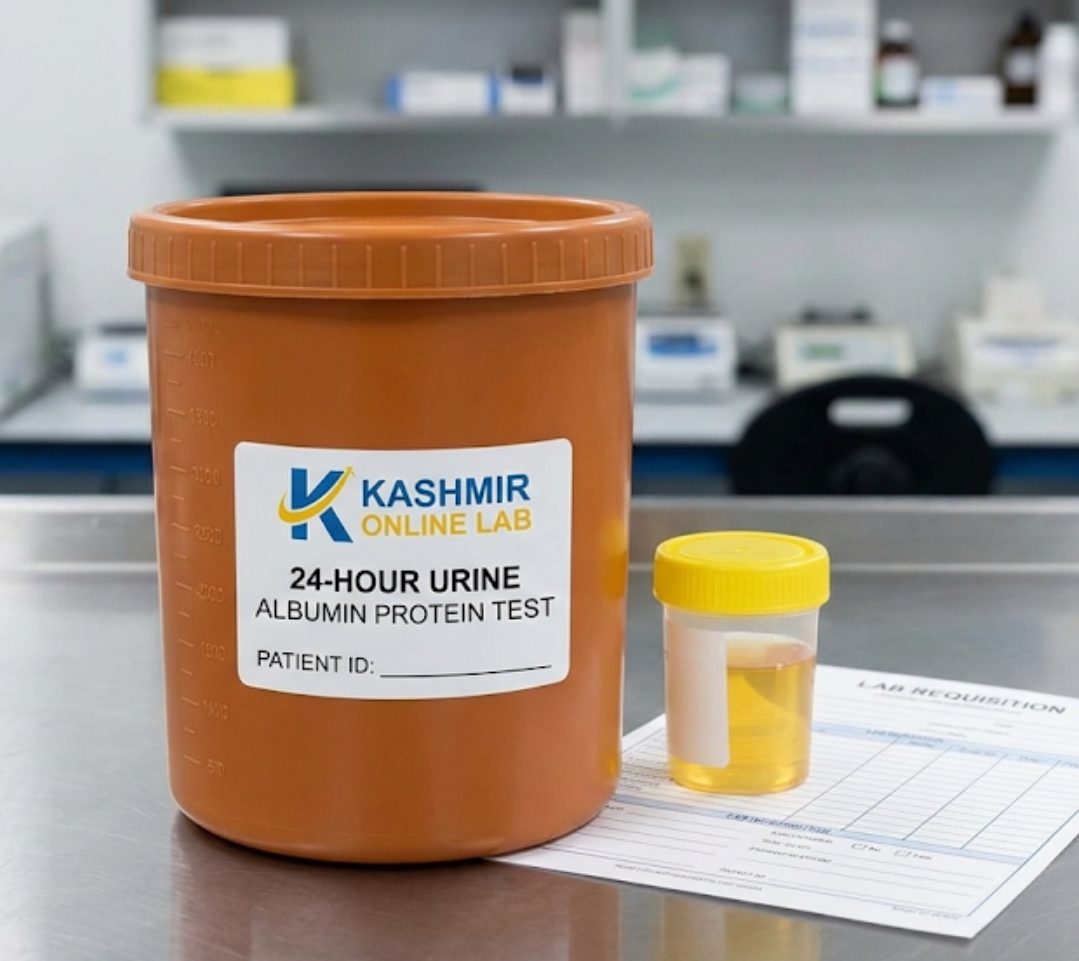
A special, large, standardized collection container (like the amber jug shown in the image) is provided by the laboratory.
The collection period typically begins in the morning.
The first morning urine void is discarded, and the time is noted.
All subsequent urine passed for the next 24 hours must be collected into the special container.
The container must be kept refrigerated or on ice throughout the collection period to prevent protein degradation and bacterial growth.
The collection includes the first urine void of the next morning at the same noted time.