Description
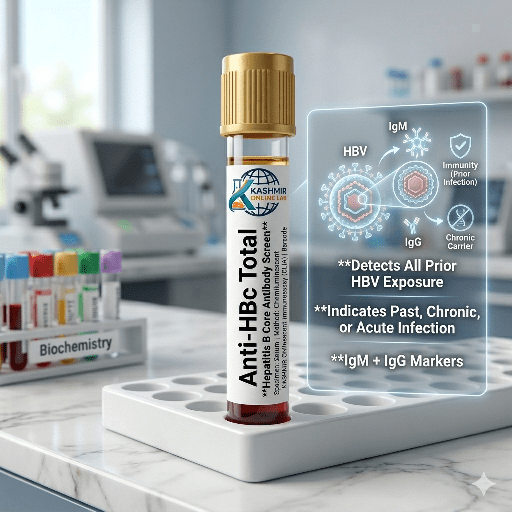
The Hepatitis B virus has a complex structure, consisting of an outer surface envelope and an inner core. When a person is infected with the actual virus, their immune system responds by creating antibodies against both parts. Anti-HBc Total measures the total amount of antibodies (both early-response IgM and lifelong IgG) targeting the virus’s core antigen. Once produced, core antibodies typically remain in the blood for the rest of a person’s life, serving as a permanent footprint of viral exposure.
Clinical Significance:
- Lifelong Exposure Marker: A positive Anti-HBc Total result means a person was exposed to the live Hepatitis B virus at some point. However, this test alone does not differentiate between an active/chronic infection and an infection that was successfully cleared years ago.
- Differentiating Infection from Vaccination: The standard Hepatitis B vaccine is made only from the virus’s surface proteins, not the core. Therefore, a vaccinated person will have surface antibodies (Anti-HBs) but will be negative for core antibodies (Anti-HBc).
- Preventing Reactivation: Doctors heavily rely on this test before starting a patient on immunosuppressive therapies (like chemotherapy or treatments for autoimmune diseases). Even if a patient cleared a Hepatitis B infection decades ago, the virus can lie dormant in the liver and dangerously reactivate when the immune system is suppressed.
- Comprehensive Screening: This test is almost always ordered as part of an acute or chronic Hepatitis B panel—alongside Hepatitis B Surface Antigen (HBsAg) and Hepatitis B Surface Antibody (Anti-HBs)—to provide a complete picture of a patient’s current viral and immune status.
When is this test recommended?
Healthcare providers typically order an Anti-HBc Total test:
- To screen for prior exposure to Hepatitis B.
- When a patient presents with symptoms of acute or chronic liver disease, such as jaundice (yellowing of eyes/skin), dark urine, extreme fatigue, or unexplained elevated liver enzymes (ALT/AST).
- Prior to beginning immunosuppressive medical treatments.
- As part of routine screening for blood, organ, and tissue donors to prevent viral transmission.
Sample Requirements:
- Specimen: Blood (Serum).
- Container: A standard Gold-top Serum Separator Tube (SST) or a Red-top tube.
Patient Preparation:
- General: No special preparation or fasting is required for this specific antibody test. Patients can eat and drink normally prior to the blood draw.